
Pakistan Faces $1.29 Billion LNG Bill as Spot Cargoes Cost Double
Pakistan will spend about $1.29 billion on LNG this winter as Qatari supply problems force costly spot market purchases.
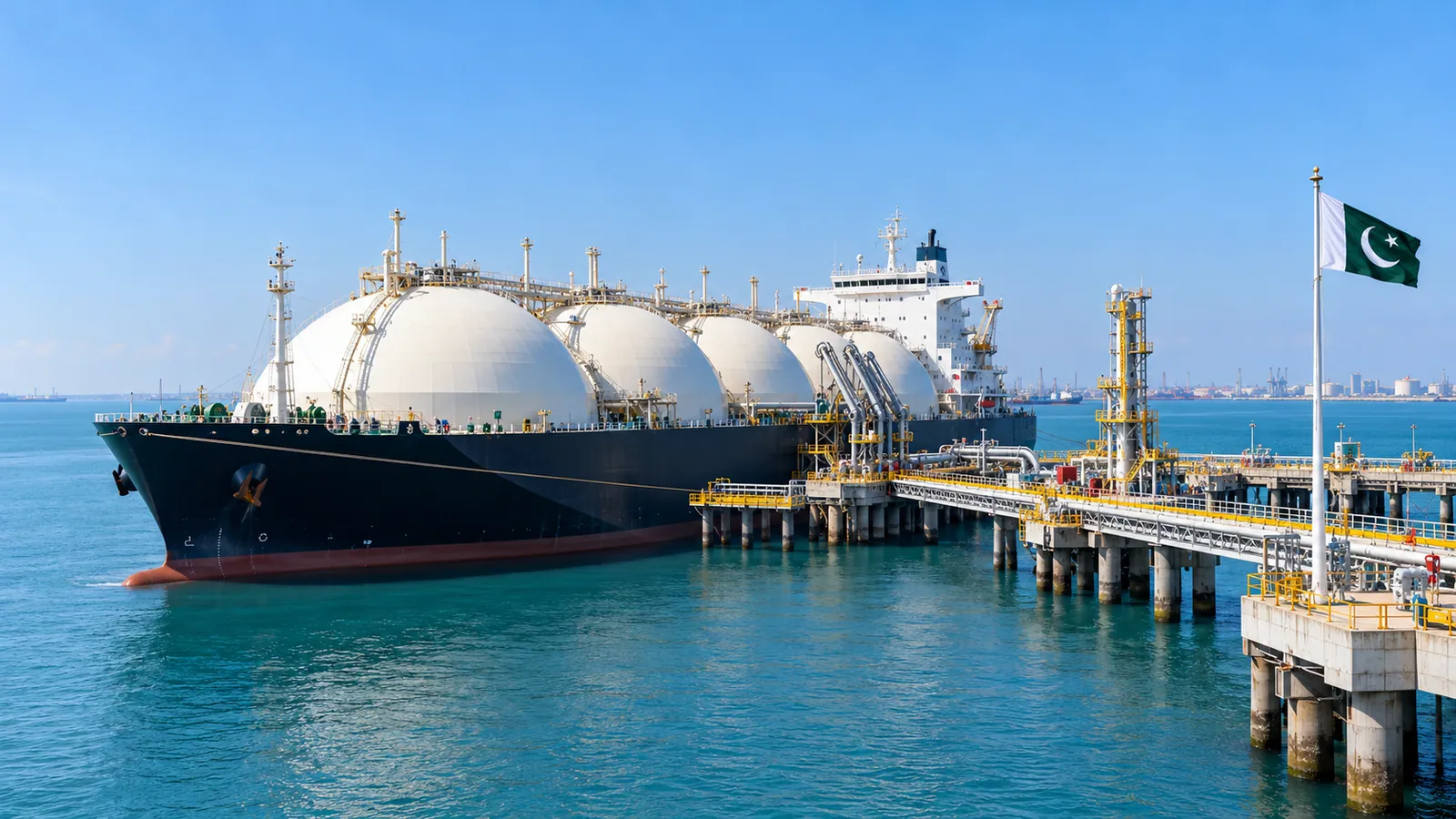
Pakistan will spend about $1.29 billion to import liquefied natural gas (LNG) between November 2026 and February 2027, according to a plan discussed at the government's energy task force meeting this month. Two thirds of that money, $863 million, will go on just 10 cargoes bought from the open spot market, where each shipment costs far more than gas from Qatar.
The reason is the war in the Middle East. Qatar supplies almost all of Pakistan's imported gas, but it has not been able to deliver normally since March, when attacks hit its giant gas plant at Ras Laffan. With winter coming and homes about to burn more gas for heating, the government is planning to fill the gap with expensive spot cargoes.
Where the 22 Cargoes Will Come From
Under the plan, Pakistan will import 22 LNG cargoes over the four winter months. Twelve will come under existing long term contracts: 11 from QatarEnergy worth an estimated $351.41 million, and one from the Italian company Eni worth $78.42 million in January. Together these cost $429.83 million. Some reports put the Qatari share at 12 cargoes, but the cost figures shared with the task force list 11 from Qatar and one from Eni.
The other 10 cargoes will be bought on the spot market. The estimate uses a price of $26.30 per mmBtu (the unit used to price gas), which was the latest price quoted in a tender. At that rate, each spot cargo costs about $86.3 million. An average Qatari cargo in the plan costs about $32 million, so a spot cargo is more than double the price, and close to three times as much.
Source | Cargoes | Estimated cost |
|---|---|---|
QatarEnergy (long term contract) | 11 | $351.41 million |
Eni (long term contract, January) | 1 | $78.42 million |
Spot market | 10 | $863 million |
Total | 22 | $1,292.83 million |
January 2027 will be the most expensive month. Eight cargoes will arrive that month at a cost of $437.32 million. December comes next at $369 million, which leaves about $487 million for November and February together. On average, Pakistan will pay about $323 million a month. Officials say these are planning figures, and the real bill will depend on how much gas is actually available, contract quantities, Brent linked contract prices and spot rates at the time of purchase.
Why Qatar Cannot Deliver
QatarEnergy stopped production at Ras Laffan on March 2, 2026, after a drone attack on the industrial area, and declared force majeure on March 4. Force majeure is a legal clause that lets a supplier stop deliveries without penalty when events outside its control make supply impossible. On March 18 and 19, Iranian missiles hit the complex again and damaged two production units. Company officials said this wiped out about 17 percent of Qatar's LNG export capacity, around 12.8 million tonnes a year, and repairs could take three to five years.
Shipping through the Strait of Hormuz, the narrow sea route every Qatari gas tanker must use, has also been badly disrupted. QatarEnergy has been extending its force majeure roughly once a month. In late September it told Pakistan and Bangladesh that cancellations would continue into November, and Pakistani officials said the latest notice runs until November 5.
Some Qatari gas is still getting through. Pakistan received two Qatari cargoes in September, on September 10 and September 23. A Petroleum Division official told Arab News that about two cargoes a month have arrived since the war started, and the government hopes for 8 to 10 Qatari cargoes this winter if conditions stay the same. He also said a cargo needs more than diplomacy, because the ship's captain, crew and insurance companies must all agree to make the trip. Islamabad is using diplomatic channels with Qatar, Iran and the United States to help these shipments pass.
From Too Much Gas to Too Little
The situation is very different from last winter. Between November 2025 and February 2026, Pakistan imported 36 LNG cargoes, and 35 of them came from Qatar. This winter's plan has only 22 cargoes, and nearly half must come from the spot market.
Just a year ago, Pakistan's problem was the opposite. Power plants were using much less imported gas, and the system had a surplus. In November 2025, Pakistan State Oil (PSO) and QatarEnergy agreed to divert 24 of Pakistan's 2026 cargoes, two a month from March, to other buyers. Under this arrangement, called net proceeds differential, Pakistan agreed to pay the difference if Qatar sold the gas at a price lower than the contract price.
PSO buys Qatari gas under two government to government deals. The first, signed in February 2016, runs for 15 years and supplies 3.75 million tonnes a year at 13.37 percent of the Brent oil price. The second, signed in February 2021 under the Pakistan Tehreek-e-Insaf government, runs for 10 years and supplies up to 3 million tonnes a year at 10.2 percent of Brent. Together they bring 6.75 million tonnes, or 108 cargoes, a year. The second deal was criticised because Pakistan did not need extra gas at the time, and it added to the later glut.
Both deals end in 2031. PSO and Qatar have now both served notices to review the contracts, and PSO is waiting for the federal government's approval to start the review with QatarEnergy. It is not yet clear what changes either side wants.
What It Means for Homes and Industry
Expensive spot cargoes put pressure on Pakistan's dollar reserves, because every cargo must be paid for in foreign currency. Officials told Arab News the government has set a limit of $27 per mmBtu for spot purchases, but warned that prices could rise to around $29. If that happens, buying all 10 spot cargoes will become even harder.
Prime Minister Shehbaz Sharif chaired a meeting on winter gas on October 6 and ordered a full gas load management plan. Under this plan, local gas will go first to household consumers, while imported gas will be kept for power plants and industry. A Petroleum Division official said there will be load management and cuts in supply to some sectors, but officials have not yet said which ones. The government also plans a public awareness campaign asking families to use other heating options, and is considering bank loans for electric water and room heaters.
The higher cost of imported gas also matters for prices. The cost of each LNG cargo feeds into the RLNG price that the regulator OGRA sets every month, which is paid by industry, power plants and other users of imported gas. Officials have also warned that if Qatari supply stays cut for the whole winter, demand for LPG cylinders could jump, along with LPG prices.
What Happens Next
The Petroleum Ministry has asked the state owned Pakistan LNG Limited to look for other suppliers in the United States, the Middle East and Azerbaijan. Azerbaijan's SOCAR supplied two cargoes to Pakistan in 2023 and 2024 under a deal signed in July 2023. The ministry has also asked the Economic Coordination Committee to let private companies use unused space at two LNG terminals, though one official said this will not add much gas because private buyers face the same high world prices.
Much now depends on Qatar. If QatarEnergy lifts its force majeure and ships move freely through Hormuz, Pakistan could need fewer spot cargoes and the bill could fall. If the disruption continues through February, the government may have to buy more expensive gas or cut supplies further. You can read the original cost estimates reported by The Express Tribune.