
Five Lahore Flights to Saudi Arabia and UAE Cancelled Amid Tensions
Five flights from Lahore to Riyadh, Dammam and Ras Al Khaimah were cancelled on Tuesday as Riyadh airport remains shut.
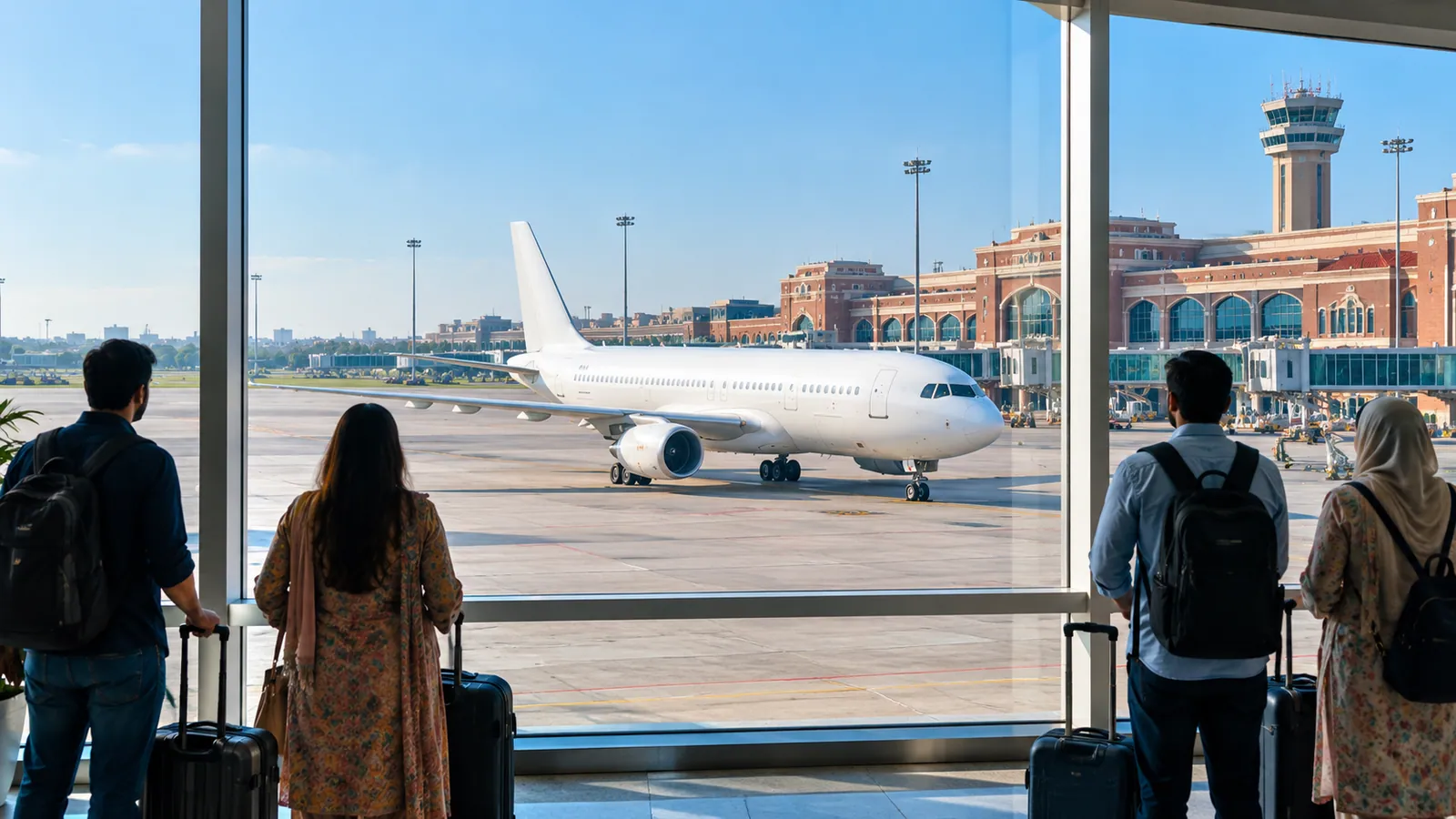
Five international flights from Lahore's Allama Iqbal International Airport to Saudi Arabia and the United Arab Emirates (UAE) were cancelled on Tuesday, October 13, according to airport sources. The cancellations come at a time when the main airport of Riyadh, the Saudi capital, has been shut for days after deadly attacks by Yemen's Houthi group.
Three of the cancelled flights were going to Riyadh. One was headed to Dammam in eastern Saudi Arabia, and one to Ras Al Khaimah in the UAE. The official reason for the cancellations has not been announced yet, and further details are awaited. Passengers have been asked to check their flight status with their airline before leaving for the airport.
The Flights That Were Cancelled
Airport sources shared the numbers of all five cancelled departures. The table below shows each flight and where it was going.
Flight | Airline | Destination |
|---|---|---|
XY318 | flynas (private Saudi airline) | Riyadh |
SV743 | Saudia (Saudi Arabian Airlines) | Riyadh |
RX676 | Riyadh Air | Riyadh |
PK725 | Pakistan International Airlines (PIA) | Dammam |
G9 855 | Named as Airblue by airport sources | Ras Al Khaimah |
Some airline names in early reports do not fully match the flight codes. XY is the code used by the Saudi budget airline flynas, and RX is used by Riyadh Air. Airport sources described flight G9 855 as an Airblue flight, but the G9 code normally belongs to Air Arabia. Passengers on this flight should check directly with the airline that issued their ticket.
PIA had already stopped its Riyadh flights for the time being on October 9, when an airline spokesperson said the move was due to the situation in the Middle East. The PIA flight cancelled on Tuesday was going to Dammam, not Riyadh.
Why Saudi Airports Are Shut
Riyadh's King Khalid International Airport, the second busiest airport in Saudi Arabia after Jeddah, has been the main target of a series of Houthi attacks. On Thursday, October 8, attacks on the airport killed three people. On Saturday, October 10, a much bigger attack killed at least 13 people and injured more than 300. It was the deadliest attack on Saudi soil in more than ten years.
A day later, on Sunday, a projectile hit Terminal 4 of the same airport and started a fire. Saudi Arabia's civil aviation authority said a Pakistani resident was killed and 11 other people were injured. Prime Minister Shehbaz Sharif condemned the attacks and repeated Pakistan's commitment to the security of Saudi Arabia.
Saudi authorities closed the airport after Saturday's attack to carry out safety checks. Reports on Tuesday said the closure has been extended until Saturday, October 17, but this date could change. Foreign airlines have also stopped flying there. Lufthansa has cancelled all Riyadh flights until October 16, Air France and KLM have suspended them until the end of October, and Etihad has cancelled its Abu Dhabi to Riyadh flights until October 19.
Other Saudi cities are also affected. Flights to and from Dammam, Jeddah and Abha have been cancelled, and Dammam airport reopened after a six hour closure. Aviation data company Cirium said that by Monday afternoon, about 46 percent of all scheduled flights across Saudi Arabia had been cancelled.
The fighting in Yemen has grown since a truce broke down in July and forces backed by Saudi Arabia started a new offensive against the Houthis. A senior Houthi official has now warned workers at Saudi airports and oil facilities to stay away from these sites.
A Hard Week for Pakistani Travellers
Tuesday's cancellations are part of a much longer list. On October 7, airport sources said 21 flights were cancelled at Lahore airport alone, while several others were delayed by three to ten hours. On Friday, October 9, 42 flights between Pakistan and Saudi Arabia were cancelled across the country, including 13 at Lahore.
On Monday, at least 34 flights from Pakistan to Riyadh were reported cancelled after Saudi authorities extended the airport closure, with 12 of them from Lahore. Even before this week, on September 12, more than 60 international flights were cancelled at Pakistani airports because of Gulf tensions, including 15 at Lahore.
Saudi Arabia is home to a very large number of Pakistani workers, and thousands of Pakistanis travel there every month for Umrah. Many Umrah pilgrims were among those stuck when flights were cancelled last week. Families who have already paid for visas, hotels and tickets now do not know when they will be able to travel.
What Passengers Should Do Now
Anyone booked on a flight to Saudi Arabia or the Gulf from Lahore, or from any other Pakistani city, should contact their airline before leaving home. Check the airline's website, app or helpline and make sure the flight is still on schedule. Going to the airport without checking can mean a long and useless wait.
If your flight has been cancelled, ask the airline about moving to a new date or getting a refund. Umrah pilgrims who booked through a travel agent should contact the agent as well, because hotel and visa dates may also need to change.
Saudi Arabia's foreign ministry has said that people who cannot reach their destination in the kingdom because of the disruption should contact Saudi missions in their own country for help. In Pakistan, this means the Saudi embassy in Islamabad or the Saudi consulate in Karachi.
Airlines have warned that flight times and routes may change at short notice while the situation in the region stays tense. More cancellations are possible until Riyadh airport reopens and the attacks stop.