
Pakistan May Allow Private LNG Imports as Qatar Supply Stalls
Pakistan is weighing a plan to let power plants and private firms import LNG directly as Qatari gas stays stuck.
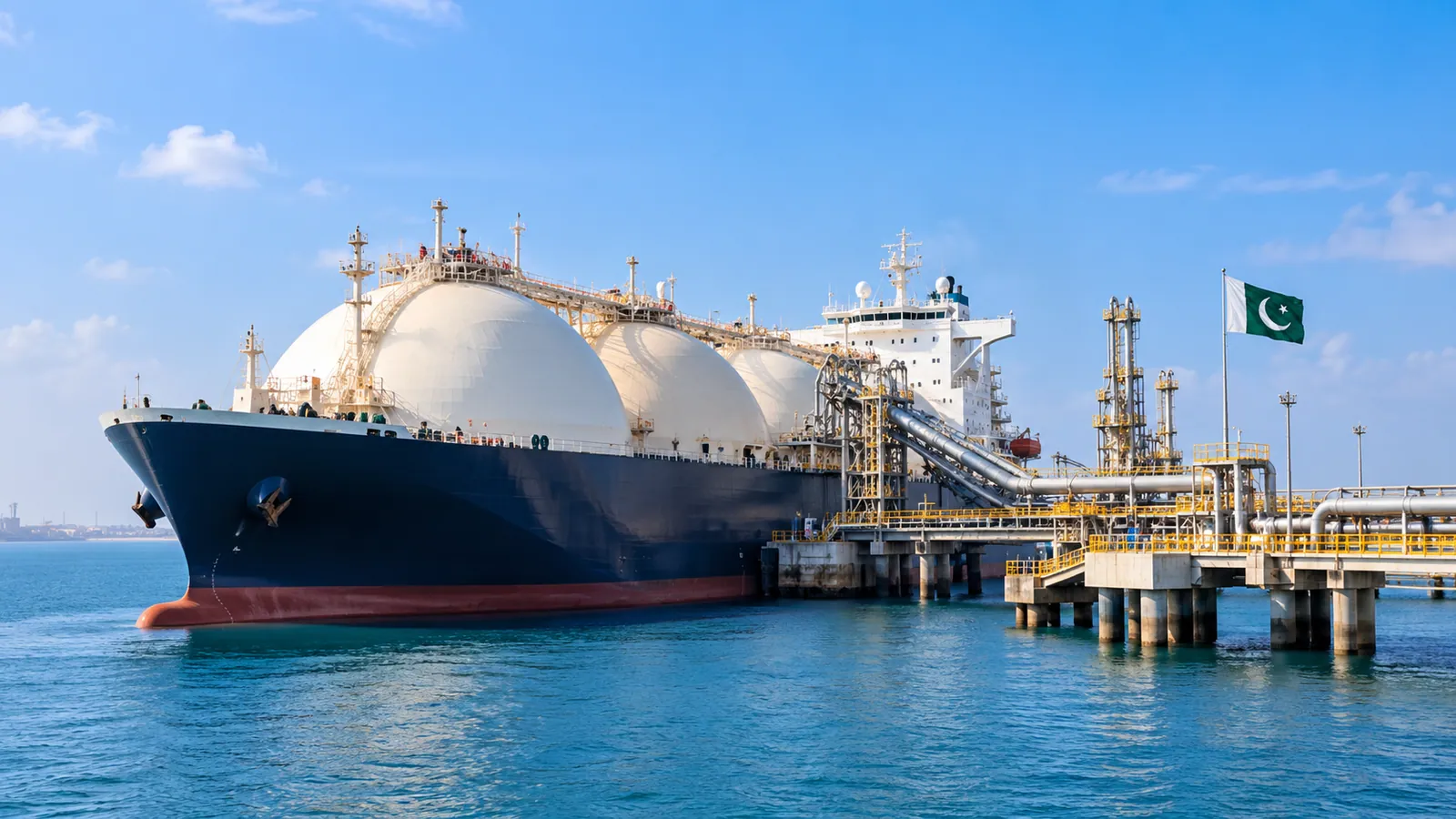
Pakistan is thinking about letting power plants and other private companies buy liquefied natural gas (LNG) from abroad on their own. The aim is to keep gas coming into the country without putting more pressure on the government's already weak finances, Bloomberg reported this week.
According to the report, the Petroleum Division of the Ministry of Energy has sent a proposal to auction more of the unused space at Pakistan's two LNG import terminals. Under the plan, private buyers would be able to order their own LNG cargoes instead of depending on the state. Government sources have not yet confirmed the proposal, and it has not been approved.
Why the Terminals Are Sitting Empty
Pakistan has two LNG terminals, both at Port Qasim in Karachi. One is run by Engro Elengy Terminal Pakistan Limited and the other by Pakistan GasPort Limited. Ships bring the gas in liquid form, and floating units at these terminals turn it back into gas and push it into the pipelines.
Since March, these terminals have been mostly idle. The trouble began on March 2, when Qatar's huge Ras Laffan LNG complex was attacked during the war in the Middle East. Two days later, QatarEnergy declared force majeure, a legal step that lets a supplier stop deliveries because of events outside its control. Qatar is Pakistan's main LNG supplier, and almost all of Pakistan's LNG comes under long-term deals with it.
Shipping through the Strait of Hormuz, the narrow sea route that Qatari tankers must use, has also been nearly shut for months. A Qatari cargo due in Pakistan in July was cancelled after the ship turned back. Qatar has extended its force majeure month after month, and in late August it told Pakistani buyers that cancellations would continue into October, according to Bloomberg and other international media.
Even with little gas arriving, Pakistan must keep paying the terminal companies. In March, The News reported that the country pays about $538,535 a day, or nearly $15 million a month, in capacity charges in US dollars, whether any gas arrives or not. Petroleum Minister Ali Pervaiz Malik called these agreements faulty and against the country's interest. Pakistan has paid around $3 billion in such charges since LNG imports began.
Costly Spot Cargoes and Power Cuts
To fill the gap, the state-owned Pakistan LNG Limited (PLL) has been buying single cargoes on the open market, known as the spot market. These are much more expensive. Qatari gas under the government-to-government deal is priced at 13.37 percent of the Brent crude oil price. In July, Pakistan bought a spot cargo from TotalEnergies at $17.37 per million British thermal units, and by August spot prices had climbed above $21, according to The News. Bloomberg says spot prices are now more than double their level before the war.
Ordinary people have felt the shortage through their electricity supply. In late August, the government apologised to the nation for long power outages and blamed them partly on a lack of LNG for power plants. PLL then floated another emergency tender on August 30 for a cargo to arrive between September 4 and 8.
Petrol and diesel prices are also under pressure. On September 20, Ali Pervaiz Malik warned in Lahore that fuel could reach Rs1,000 per litre if a shortage develops. Petrol is now selling at Rs389.14 per litre and high-speed diesel at Rs424.04, after prices rose by about 50 percent. The minister said there is no petrol shortage at the moment.
What the New Plan Would Change
At present, the rules make it very hard for anyone other than PLL to buy LNG cargoes from the spot market. This means the government carries almost all the cost and risk of buying gas, at a time when its budget is already tight.
If the proposal goes ahead, a power plant, factory or gas company could win unused space at a terminal through an auction, buy its own cargo from a foreign seller and bring it into Pakistan. It would pay a fee to use the terminal and the pipelines, and the government would not have to pay for the gas itself. The terminals, which Pakistan is paying for anyway, would also be put to use.
Pakistan GasPort Limited has asked for this for a long time. Its chairman, Iqbal Z. Ahmed, has argued that the private sector should be allowed to import LNG, and that gas in Pakistan costs far more than it should because of port charges, taxes and margins.
An Old Idea That Never Fully Took Off
The idea is not new. The Oil and Gas Regulatory Authority (OGRA) made third party access rules in 2018, which allow private firms to use the state gas network. In July 2020, the Economic Coordination Committee (ECC) approved giving private companies access to unused terminal space, and in October 2020 the government offered spare capacity at the GasPort terminal to private firms for six months. In January 2021, OGRA gave licences to two private companies, Energas and Mitsubishi's Tabeer Energy, to sell imported gas.
In August 2022, PLL and GasPort signed a deal to let GasPort use its spare space. The GasPort terminal can handle 750 million cubic feet of gas a day, while PLL had booked only 600. The government of the time later dropped that deal. In the same month, a Senate committee asked the government to help private companies import LNG to reduce pressure on the national treasury. Despite all these steps, private imports have stayed very small and the state has remained the main buyer.
What Happens Next
The Petroleum Division's plan still has to be approved. Earlier LNG policy decisions have gone to the ECC and the federal cabinet, and no timeline has been announced for this one.
For ordinary Pakistanis, the plan will not bring cheap gas overnight, because private buyers would also have to pay today's high spot prices. But it could mean more gas reaching power plants and industry, and less money leaving the government's pocket while Qatari supplies remain stuck in the Gulf. With winter coming and demand for gas set to rise for heating and cooking, the timing of the decision will matter. The petroleum minister has said the government will not allow gas shortages for consumers this winter.