
Pakistan Faces $2 Billion Cotton Import Bill as Crop Falls Short
Pakistan may spend $2 billion on foreign cotton this year as local output stays near 5 million bales.
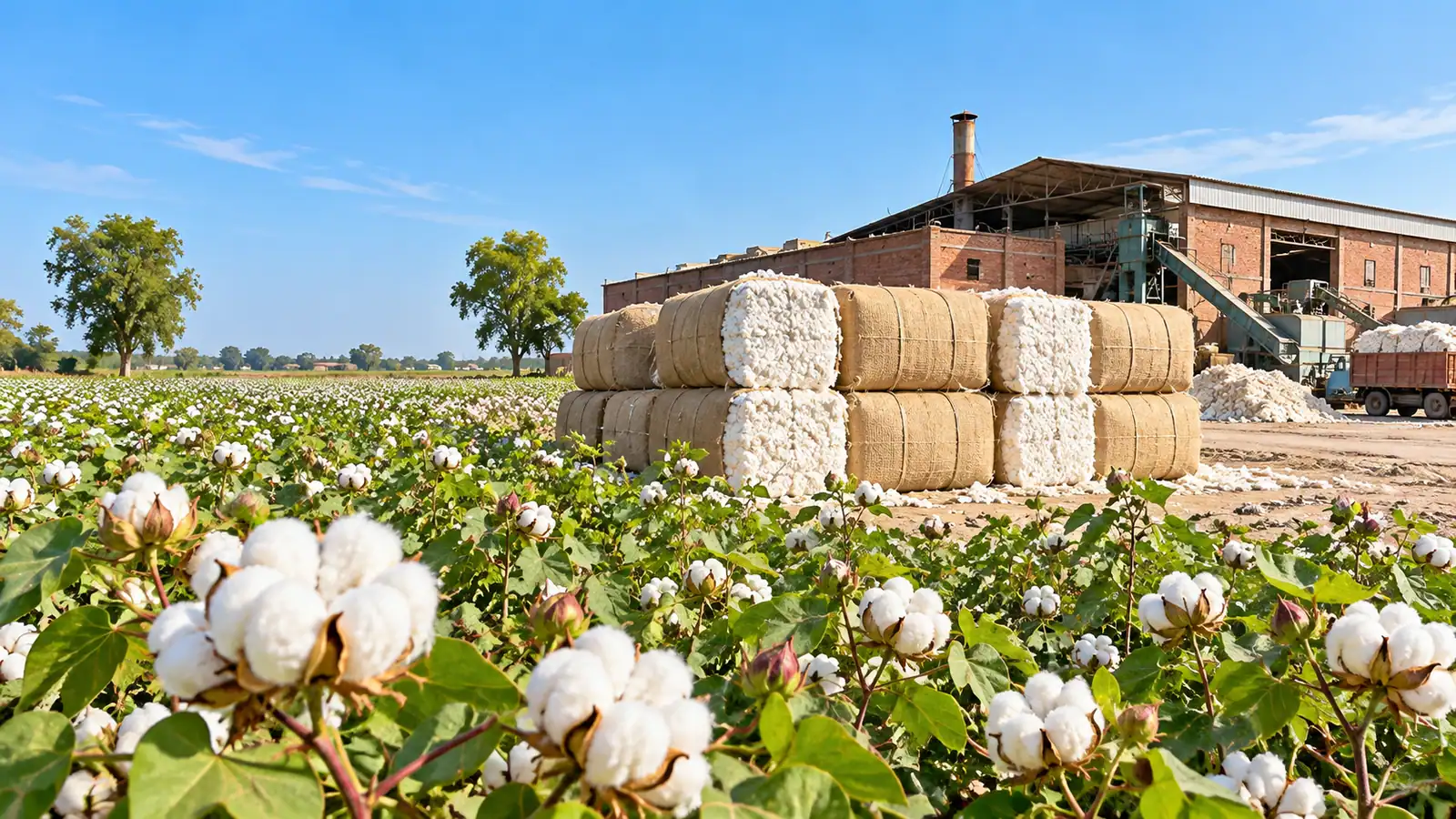
Pakistan may have to spend around $2 billion, or about Rs. 600 billion, on buying cotton from other countries in the current financial year 2026-27. Business leaders say the country's own crop will once again fall far short of what its textile mills need, and the gap will be paid for in dollars.
The warning came from Mian Zahid Hussain, Chairman of the Policy Advisory Board of the Federation of Pakistan Chambers of Commerce and Industry (FPCCI). Discussing the latest forecast of the US Department of Agriculture (USDA), he said local output could stay at only about 4.9 million bales this year. The government's target was 9.6 million bales, and spinning mills need around 10 million bales every year.
That leaves a shortfall of more than 5 million bales. Mills will have to buy this cotton abroad, mostly from countries like the United States and Brazil.
What the US report says
The USDA's September cotton outlook, released on September 15, put Pakistan's 2026-27 crop at 5.0 million bales. That is about 6 percent, or 300,000 bales, lower than last year. Only a month earlier, the forecast had been 5.1 million bales.
The main reason is fewer fields. The government had planned to grow cotton on about 2.16 million hectares this season. But actual sowing fell short by 18 percent in Punjab and 11 percent in Sindh. The USDA report said many farmers in Punjab chose sugarcane instead, because it paid better than cotton this year.
At the same time, the USDA expects Pakistani mills to use about 10.2 million bales this season, which is more than last year. Pakistan is one of the three countries, along with China and India, expected to drive most of the growth in world cotton use in 2026-27.
One point readers should know is that the USDA counts cotton in bales of 480 pounds, which is about 218 kg. Pakistani ginners use smaller bales of about 170 kg. So a USDA figure of 5 million bales works out to roughly 6.4 million local bales. Even in local terms, however, production remains well below the 10 million bales that mills need.
Early picking shows a better start
There is some good news from the fields. According to the Pakistan Cotton Ginners Association (PCGA), 2.389 million bales of cotton had reached ginning factories by September 15. That is 19 percent more than the 2.004 million bales recorded by the same date last year.
Punjab's arrivals rose nearly 25 percent to 860,942 bales, while Sindh's rose about 16 percent to 1.528 million bales. In a sign of how far Punjab has slipped, the single Sindh district of Sanghar sent 888,607 bales, more than all of Punjab's ginning factories put together. Textile mills had already bought more than 2 million bales by mid September.
Some in the trade hope that good weather could push this year's crop above 6 million local bales. Experts have warned, however, that the crop is now at a critical stage. Pink bollworm attacks, rain, timely picking and the quality of the fibre will decide the final number, which will only be clear once the season ends.
A crop that keeps shrinking
Cotton was once called Pakistan's "white gold", but output has been falling for years. Production was about 7 million bales in 2023-24. It then dropped to around 5 million bales in 2024-25. In 2025-26 it stood at around 5.6 million bales, while imports reached about 6 million bales.
Mian Zahid said the main cause is the shrinking area under cotton. According to him, the land used for cotton has fallen by around 33 percent over the last ten years. Many farmers have moved to sugarcane, which they see as safer and more profitable.
The shortage became very clear earlier this year. In May, local mills began buying large amounts of American cotton even before Pakistan's own ginning season had started, because stocks at home had almost run out. In one week, Pakistani mills bought about 206,100 of the 216,000 bales of the new US crop sold worldwide. At that time, business groups estimated the yearly cotton import bill at $1 billion to $1.2 billion. The new estimate is nearly double that figure.
Why it matters for ordinary Pakistanis
Textiles are the backbone of Pakistan's exports. The sector earns over half of the country's merchandise export income and employs millions of workers. Every bale that comes from abroad has to be paid for in dollars, which puts pressure on the foreign exchange reserves and on the rupee.
Mian Zahid said the money that could have gone into the pockets of local farmers will instead go to foreign growers. Cotton also supports a long chain of rural jobs, from pickers and ginning factory workers to cottonseed oil mills. Cottonseed cake is also used as animal feed, so a smaller crop can affect dairy and livestock farmers too.
He also pointed to the high cost of power. He said factories in neighbouring countries pay around 8 US cents per unit of electricity, while Pakistani industry pays around 14 cents. This makes Pakistani yarn and cloth more expensive to produce and harder to sell abroad.
What business leaders are asking for
Mian Zahid urged the government to take urgent steps to revive cotton and support farmers, ginners and the textile industry. He backed demands to move sugar mills out of cotton growing areas, so that farmers there are not pulled towards sugarcane. He also called for removing sales tax on cotton and its by-products, ending fixed taxes in electricity bills and fully enforcing the Cotton Control Act.
He asked the government to launch the proposed "Grow Cotton, Save Economy" campaign on an emergency basis. He also wants the ginning sector to be given industrial status, so that ginning factories can get electricity and gas at industrial rates.
It is not yet clear whether the government will accept these demands. The next PCGA report, covering arrivals up to September 30, is due in early October, and the USDA will issue its next monthly forecast later in October. These two updates will show whether the strong early picking can reduce the import bill, or whether Pakistan will once again depend on foreign cotton to keep its mills running.