
Pakistan, Ethiopia Move Closer to Visa-Free Deal for Officials
Pakistan and Ethiopia review a visa waiver for officials, while Islamabad presses Addis Ababa to clear pending Pakistani medicine registrations.
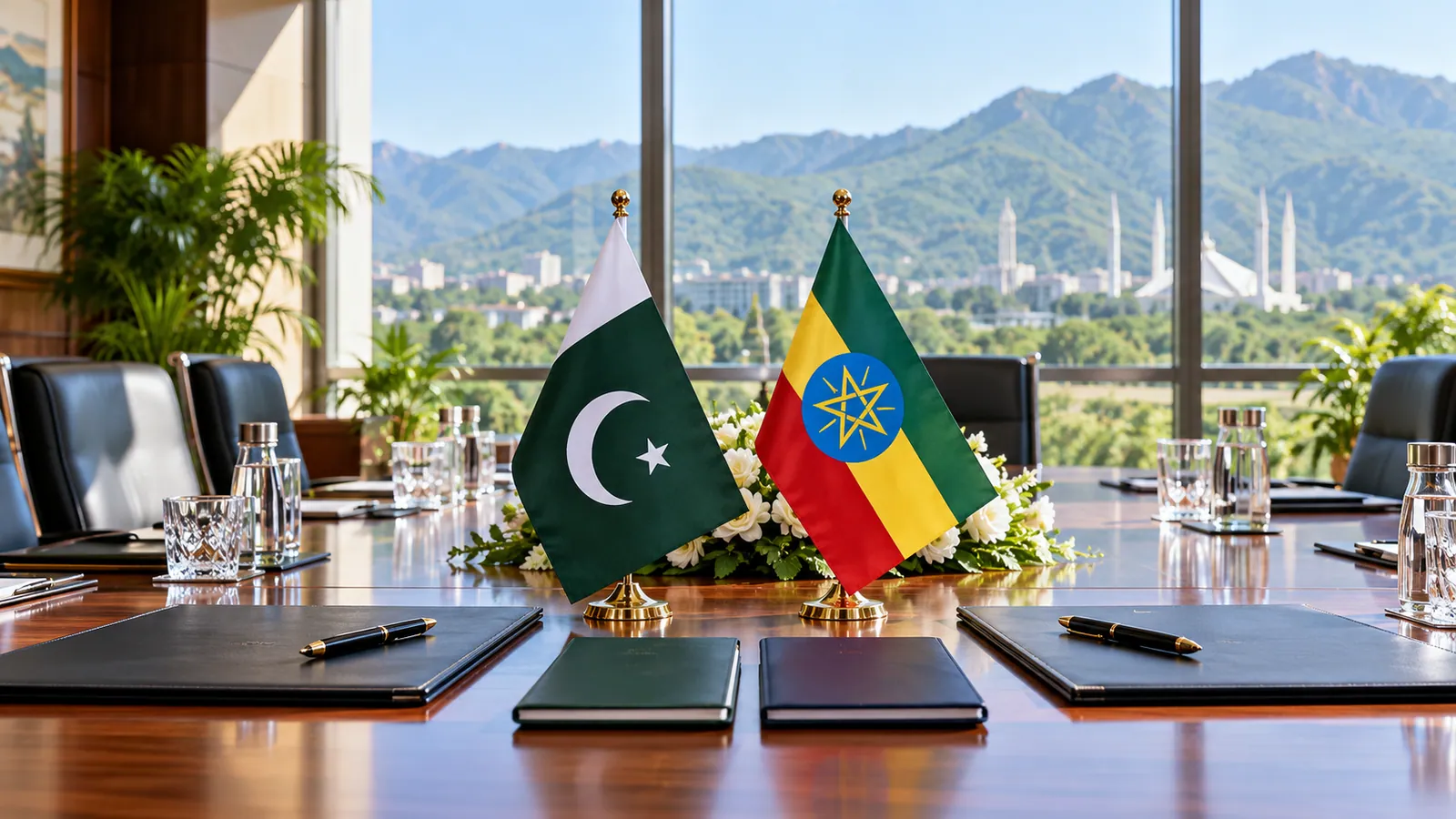
Pakistan and Ethiopia are moving closer to an agreement that will let government officials travel between the two countries without a visa. The proposed deal was reviewed in Islamabad when Ethiopian Ambassador Dr Oumer Hussein Oba met Federal Commerce Minister Jam Kamal Khan at his office, the Ministry of Commerce said in a statement on Tuesday.
The agreement will only cover people who hold diplomatic and official passports. Ordinary Pakistanis who travel on a normal passport are not part of it. No date has been given for signing, but the ambassador said he hoped the deal would be finalised soon.
The meeting was mainly about trade. Rana Ihsaan Afzal, the Prime Minister's Coordinator on Commerce and Industries, Commerce Secretary Jawad Paul and other senior officials also took part. The biggest issue on the table was Pakistani medicines that are still waiting for approval in Ethiopia.
Who the visa deal is for
Diplomatic passports are given to diplomats and senior state officials. Official passports are given to government employees who travel abroad for official work. Under the proposed deal, these people would be able to enter Ethiopia without first applying for a visa, and Ethiopian officials would get the same facility in Pakistan.
Pakistan already has similar deals with dozens of countries, including Saudi Arabia, the UAE, Turkiye, Malaysia, Indonesia, Bangladesh and Russia. The Federal Investigation Agency (FIA) applies these deals at airports using an official list of countries. The allowed stay is different for each country and ranges from one month to three months.
Ethiopia has signed the same type of deal with several countries, including China, India, Indonesia and the UAE. In Ethiopia, these agreements need approval from parliament. The process can take time. Ethiopia's parliament approved its deal with India in October 2023, but it only came into force in January 2026, after the two countries exchanged official diplomatic notes.
Pakistani medicines waiting for approval
Before any medicine can be sold in a country, that country's health regulator must check it and register it. Jam Kamal asked Ethiopia to speed up these approvals for Pakistani pharmaceutical companies. He said quick decisions and clear rules were needed so that Pakistani exporters could trust the Ethiopian market.
The minister said Pakistan's medicine industry was growing and wanted to sell more in Africa. Ambassador Oumer told the meeting that he had already taken the pending registration cases to the Ethiopian health authorities. He said they had given him positive assurances that the cases would be settled soon.
Commerce Secretary Jawad Paul said an Ethiopian technical team should visit Pakistan as early as possible to inspect and evaluate Pakistani drug companies. He said finishing these checks and other formalities on time would help clear the pending approvals and open the way for more medicine exports. No date for the team's visit has been announced.
Trade between the two countries is still small
Trade between Pakistan and Ethiopia has stayed low for years. Figures from Ethiopia's trade ministry show the two countries traded goods worth about $46.6 million in 2022. In the five years from 2018 to 2022, the yearly average was about $71.8 million, and Pakistan sold far more than it bought.
Pakistan mainly sends surgical instruments, leather, textiles and medicines to Ethiopia. Ethiopia can sell oilseeds, pulses and spices to Pakistan. Jam Kamal called Ethiopia a possible gateway for Pakistani businesses into East Africa. He named pharmaceuticals, food products and banking as areas with good chances.
Ties have grown in the last few years. Ethiopia opened its embassy in Islamabad in 2022, and the two countries signed a trade agreement in 2023. Pakistan held a single country exhibition in Addis Ababa in May 2025. In April this year, the same minister and ambassador agreed to set up a Joint Trade Committee, and the ambassador said Ethiopian Airlines was planning direct flights to Lahore.
WTO talks and what comes next
The meeting also looked at Ethiopia's effort to join the World Trade Organization (WTO). Ethiopia first applied in 2003 and is still going through the process. A country that wants to join must hold market access talks with existing members, so Pakistan can raise its trade concerns at this stage. Jam Kamal said both sides should get fair access to each other's markets, and the ambassador said Ethiopia was ready to discuss Pakistan's concerns.
Both sides agreed to work on removing trade barriers, improve links between the two countries and keep their institutions in close contact. The next steps to watch are the visit of the Ethiopian inspection team, the signing of the visa agreement and the work of the Joint Trade Committee. In April, the ambassador also said Ethiopia planned to hold its own trade exhibition in Islamabad by the end of 2026.
For ordinary Pakistani travellers, nothing changes for now. Anyone going to Ethiopia on a normal passport will still need a visa, just as before.