
Riyadh Airport Closure Extended to October 17 After Houthi Attacks
Riyadh's main airport will stay shut until October 17 after deadly Houthi attacks, hitting Pakistani workers, pilgrims and travellers.
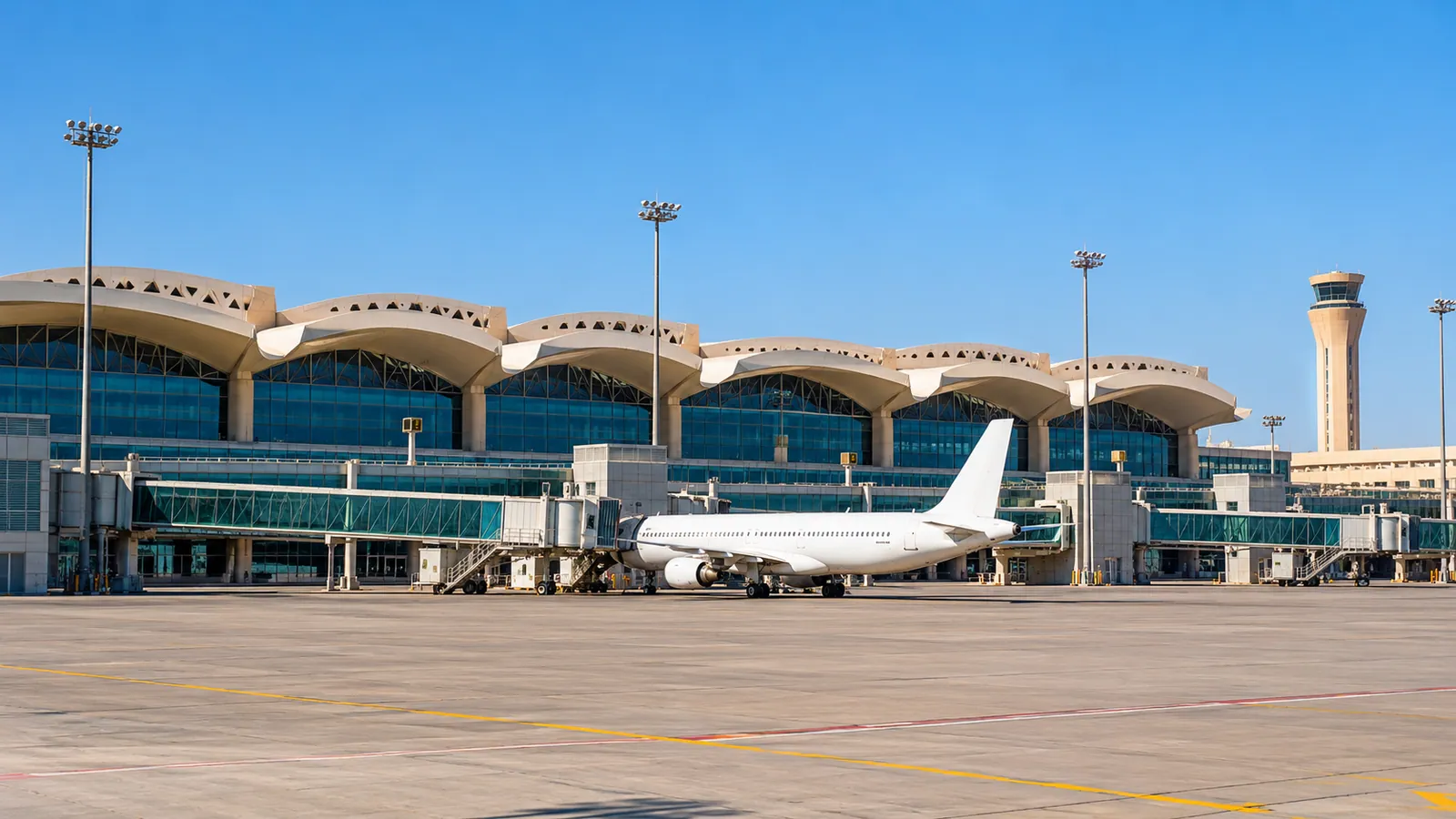
Saudi Arabia has extended the closure of King Khalid International Airport in Riyadh until October 17, after a week of deadly missile and drone attacks by Yemen's Houthi group. Airlines from Europe, Asia and the Gulf have cancelled their flights, and almost no passenger planes are now flying in or out of the Saudi capital.
Saudi Arabia's General Authority of Civil Aviation said operations were stopped so the airport's safety and facilities could be fully checked before it opens again. A Notice to Airmen, the official alert sent to pilots and airlines, later showed the airport will stay closed until 2100 GMT on October 17. That is midnight in Riyadh and 2am on October 18 in Pakistan.
The news hits Pakistan directly. Riyadh is one of the busiest routes for Pakistani workers, and Pakistanis are among the people killed and injured in the attacks.
A Week of Attacks on Saudi Airports
The attacks began on October 6 and 7, when missiles and drones hit Riyadh airport and Abha International Airport in the south of the kingdom. Three people were killed and 36 were injured, including one Pakistani. On Thursday, October 8, another strike hit Riyadh airport and destroyed a Saudia passenger plane. Three Saudi citizens, including a Saudia pilot, lost their lives.
The worst attack came on Saturday, October 10. A ballistic missile hit the building that holds Terminals 3 and 4. Thirteen people were killed and more than 300 were injured, making it the deadliest attack inside Saudi Arabia in more than ten years. The dead included people from Saudi Arabia, Bangladesh, the United States, Egypt, India and several other countries.
One day later, on Sunday, another strike started a fire in a passenger hall of Terminal 4. One person was killed and 11 were hurt. Dammam's King Fahd International Airport was also attacked the same day, and flights there stopped for about six hours before restarting.
According to media reports quoting Saudi officials who did not give their names, early findings show the Houthis first sent several drones and then fired cruise and ballistic missiles at the airport. Saudi Arabia is now looking into how these weapons got past its air defences.
Pakistanis Among the Victims
Saudi Arabia's civil aviation authority confirmed that the person killed in Sunday's attack was a Pakistani resident. A day earlier, six Pakistani nationals were injured in the Saturday strike, Prime Minister Shehbaz Sharif said in a post on X. He said the Pakistani embassy in Riyadh was in close contact with Saudi authorities and was helping the affected families.
Deputy Prime Minister and Foreign Minister Ishaq Dar said that attacking civilians and civilian places is unacceptable and breaks international law. He directed the embassy to give all possible help to the injured Pakistanis. Pakistan also joined Saudi Arabia, Egypt and Turkey in a joint statement condemning the Houthi attacks, and said it stands firmly with the kingdom's security under the Makkah Joint Defence Agreement between the two countries.
What It Means for Pakistani Travellers
PIA stopped its Riyadh flights on Friday, October 9, a day after the attack on the Saudia plane. Its flight PK-753 from Islamabad to Riyadh and the return flight PK-754 were cancelled, and the airline has not given a date to restart. PIA has asked passengers to call its call centre at 111-786-786 before leaving home for the airport.
Private and foreign airlines flying from Pakistan have also cancelled their Riyadh services. Local media reported that more than 30 flights from Pakistani airports to Riyadh were cancelled on Monday alone, including several from Lahore's Allama Iqbal International Airport. One flight from Lahore to Dammam was also cancelled.
The Pakistan Airports Authority said earlier that only Riyadh flights have been stopped and that flights to other Saudi cities are continuing. Jeddah, Madinah and Dammam airports are working, but they are facing some delays and cancellations. This is important for Umrah pilgrims, because most of them travel through Jeddah and Madinah, not Riyadh.
Anyone holding a ticket to or from Riyadh should contact their airline or travel agent before going to the airport. Ask about moving the booking to a later date or to another Saudi city, or about getting a refund. Workers who need to reach Riyadh for a job should also keep their employer informed about the delay.
Saudi Arabia is home to more than two million Pakistanis, the largest Pakistani community abroad, and the money they send home is a major support for Pakistan's economy. A long closure of the Saudi capital's main airport makes travel harder for these workers and their families on both sides.
Airlines Around the World Pull Back
The crisis has spread far beyond Saudi Arabia. Flight tracking website Flightradar24 showed planes staying away from Riyadh on Monday, while jets still crossed Saudi airspace and landed at Jeddah on the west coast. Aviation data company Cirium said 46.4 percent of flights at all Saudi airports were cancelled.
Lufthansa Group has cancelled all Riyadh flights until October 16, while Air France and KLM have stopped flights to and from the city until the end of October. Etihad Airways of Abu Dhabi has also extended its cancellations. In the United States, Delta Air Lines has pushed back its new Atlanta to Riyadh service, which was due to start on October 23, to March 2027.
The US Federal Aviation Administration has told American airlines to be careful when flying to or over Saudi Arabia, and the European Union's aviation safety agency has widened the area of Saudi airspace it warns airlines to avoid. Mark Zee, founder of the aviation safety group OPSGROUP, said such a long and heavy wave of attacks on civil aviation has never been seen before. The Houthis, for their part, have warned all airlines not to use Saudi airports, saying they could be targets.
Why the Fighting Started and What Comes Next
The fighting between Saudi Arabia and the Houthis restarted in July 2026, after a Saudi air strike on Sanaa airport in Yemen on July 13. Saudi Arabia says it is backing an offensive by Yemen's UN-recognised government to take back land from the Houthis. The Houthis say their strikes on Saudi airports are revenge for Saudi attacks on airports, hospitals and markets in Yemen.
All of this is happening during the wider war involving Iran that began earlier this year, which had already closed many air routes in the Gulf. PIA, for example, stopped its flights to the UAE, Qatar, Bahrain and Kuwait on March 1, but had kept flying to Saudi Arabia until this month.
The Saudi-led coalition has called Saturday's strike a war crime and promised a strong response. UN Secretary General Antonio Guterres condemned the attack, while US President Donald Trump said Washington would decide whether to step in.
For now, the date to watch is October 17. Saudi authorities have already extended the closure more than once, so it could be extended again if the attacks continue or repairs take longer. Pakistani passengers should follow updates from their airline and the Pakistani embassy in Riyadh, and should not travel to the airport without first confirming their flight.