
Israel Fires Phosphorus Shells on South Lebanon Villages
Israel fired phosphorus shells on Nabatieh villages on Friday as the UN warned peace in southern Lebanon remains elusive.
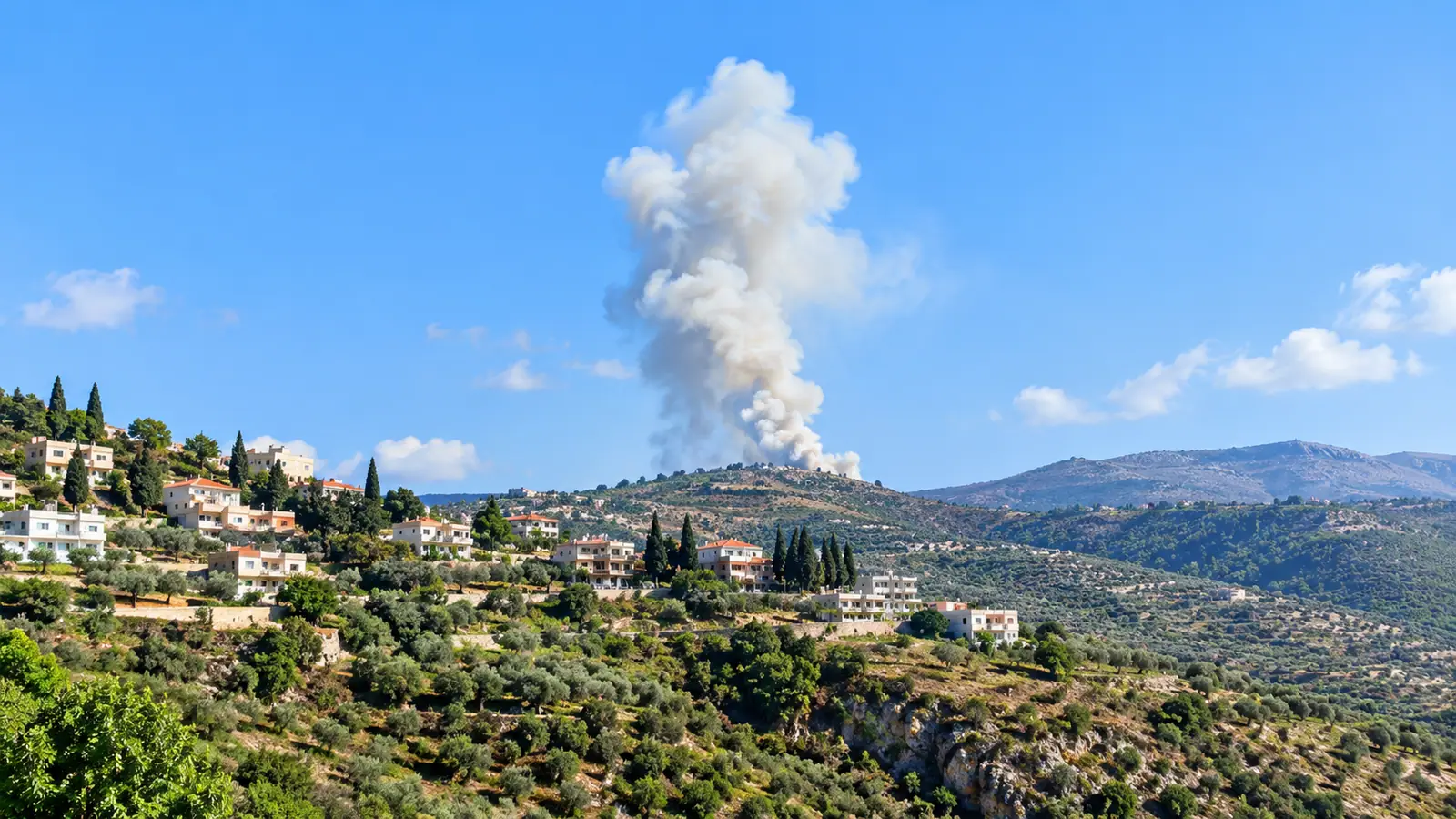
Israeli forces fired phosphorus shells at villages in southern Lebanon on Friday, September 25, Lebanon's state news agency NNA reported. The shelling hit the outskirts of Zawtar al-Sharqiyah, Mayfadoun and Nabatieh al-Fawqa in the Nabatieh district. The attacks came only days after the United Nations peace force in Lebanon said that real peace in the south is still out of reach.
According to NNA, phosphorus shells first landed on Nabatieh al-Fawqa. Later in the day, Israeli guns struck Zawtar al-Sharqiyah again with the same kind of shells. These reports come from Lebanese state media and could not be independently confirmed.
Shelling Spreads Across the South
The attacks were not limited to Nabatieh. In the Tyre district, Israeli artillery also hit Wadi Zibqin and the edges of the villages of Haris and Haddatha. Reports of Friday's shelling did not mention any casualties.
On the same day, Lebanese army bomb experts found two Israeli aerial bombs that had not exploded. One was in Majdal Selm in the Marjayoun district and the other was in Al-Ghandouriyah in the Bint Jbeil district. The soldiers made both bombs safe and moved them away from the villages. Bombs like these stay dangerous for farmers and children long after the guns go quiet.
Friday was not a one off. On September 21, Israel fired phosphorus munitions at the Tyre district and set olive groves and citrus orchards on fire, according to reports from the area. In August, NNA also reported phosphorus shelling near Dabsha Hill and the Ali al-Taher heights, close to Nabatieh al-Fawqa. Local reports say the area around Ali al-Taher has seen some of the heaviest strikes in recent weeks, and many people fear a new round of major fighting.
What Is White Phosphorus?
White phosphorus is a chemical that catches fire as soon as it touches the air. Armies use it to make thick white smoke that hides soldiers, or to light up an area. But it burns at a very high heat and sticks to skin, clothes and buildings. It can cause very deep burns and can easily start fires in homes and fields.
International law does not ban the chemical completely. But rights groups say firing it in the air over places where many civilians live is against the laws of war, because it cannot tell the difference between fighters and ordinary people. In March this year, Human Rights Watch said it had checked photos showing white phosphorus fired over homes in the southern town of Yohmor, where at least two houses caught fire. The group said Israel had also used it in border villages between October 2023 and May 2024.
A Heavy Human Cost
The current war in Lebanon began in early March, when Hezbollah attacked Israel in support of Iran during the wider Middle East war. Israel answered with heavy air strikes and a ground invasion of the south. Since then, Lebanese authorities say at least 4,386 people have been killed and 12,407 wounded. More than one million people have been forced to leave their homes.
Many families still have not gone back. Lebanese Prime Minister Nawaf Salam told UN Secretary General Antonio Guterres this week that around 329,000 people remain displaced. Israel is keeping troops in what it calls a "security zone" about 10 kilometres deep inside southern Lebanon along the border.
June Deal Has Not Stopped the Attacks
The shelling goes on even though Lebanon and Israel signed a framework agreement on June 26 after talks in the United States. Under the deal, Israel is supposed to pull its forces out of southern Lebanon step by step. In return, the Lebanese army will move into those areas and Hezbollah will have to give up its weapons.
The plan starts with two small "pilot zones", where the Lebanese army takes full control first. Israel says it will only fully leave once Hezbollah's weapons are removed and this has been checked. Hezbollah rejected the deal from day one. Its leader Naim Qassem called it a humiliation, and one of its officials warned it could even lead to civil war. This deep split is one big reason the deal has moved so slowly.
UN Force Says Peace Is Still Far Away
The UN Interim Force in Lebanon, known as UNIFIL, marked the International Day of Peace with a small ceremony at its headquarters in Naqoura on Monday evening. In a statement on Tuesday, the mission said: "Today, peace in south Lebanon remains elusive, but the hope for peace endures." In simple words, peace is still hard to reach, but people have not lost hope.
UNIFIL said its soldiers can calm tensions and stop small mistakes from turning into bigger fights. But it said peacekeepers cannot replace the political decisions that only the two sides can make. Force commander Major General Diodato Abagnara said: "Peace is not something we address once a year; it is an enduring responsibility." He said his troops keep patrolling, keep talking to both sides and work closely with the Lebanese army as it takes on more duties in the south.
Abagnara said the full use of UN Security Council Resolution 1701 is still the aim. That resolution was passed in 2006 after a 33 day war between Israel and Hezbollah. It says the area between the border line and the Litani River should have no weapons or armed men except the Lebanese army and UN troops.
This was also UNIFIL's last Peace Day. Under pressure from the United States, the Security Council voted in 2025 to end the mission at the close of 2026. The force now has about 7,500 soldiers from 46 countries and has been in Lebanon since 1978. Lebanon's leaders want a new international force to take its place so the south does not face a security gap, and France, Italy and Türkiye have also backed a new arrangement.
Why This Matters for Pakistan
Pakistan has spoken out against Israel's attacks on Lebanon several times this year. In April, the Foreign Office called them a blatant violation of international law and asked the world to take urgent steps to stop them. On September 14, Prime Minister Shehbaz Sharif met visiting Lebanese Interior Minister Ahmad Al Hajjar and repeated Pakistan's firm support for Lebanon's sovereignty and borders.
The fighting in Lebanon is also tied to the wider war in the region, which has already touched Pakistan's economy. In April, Iran halted oil moving through the Strait of Hormuz after Israeli strikes on Lebanon. Pakistan buys most of its oil from abroad, so fresh fighting in the Middle East can push up petrol prices at home. Millions of Pakistanis also work in Gulf countries, and their families back home depend on calm in the region.
For now, the people of southern Lebanon are still waiting. The deal signed in June promised a way out, and the UN still speaks of hope. But as phosphorus smoke rose again over Nabatieh on Friday, that peace looked as far away as ever.