
Netanyahu Did Not Share UAE Hamas Attack Warning, NYT Says
The New York Times says Netanyahu never told Israel's security chiefs about a UAE warning of a big Hamas attack.
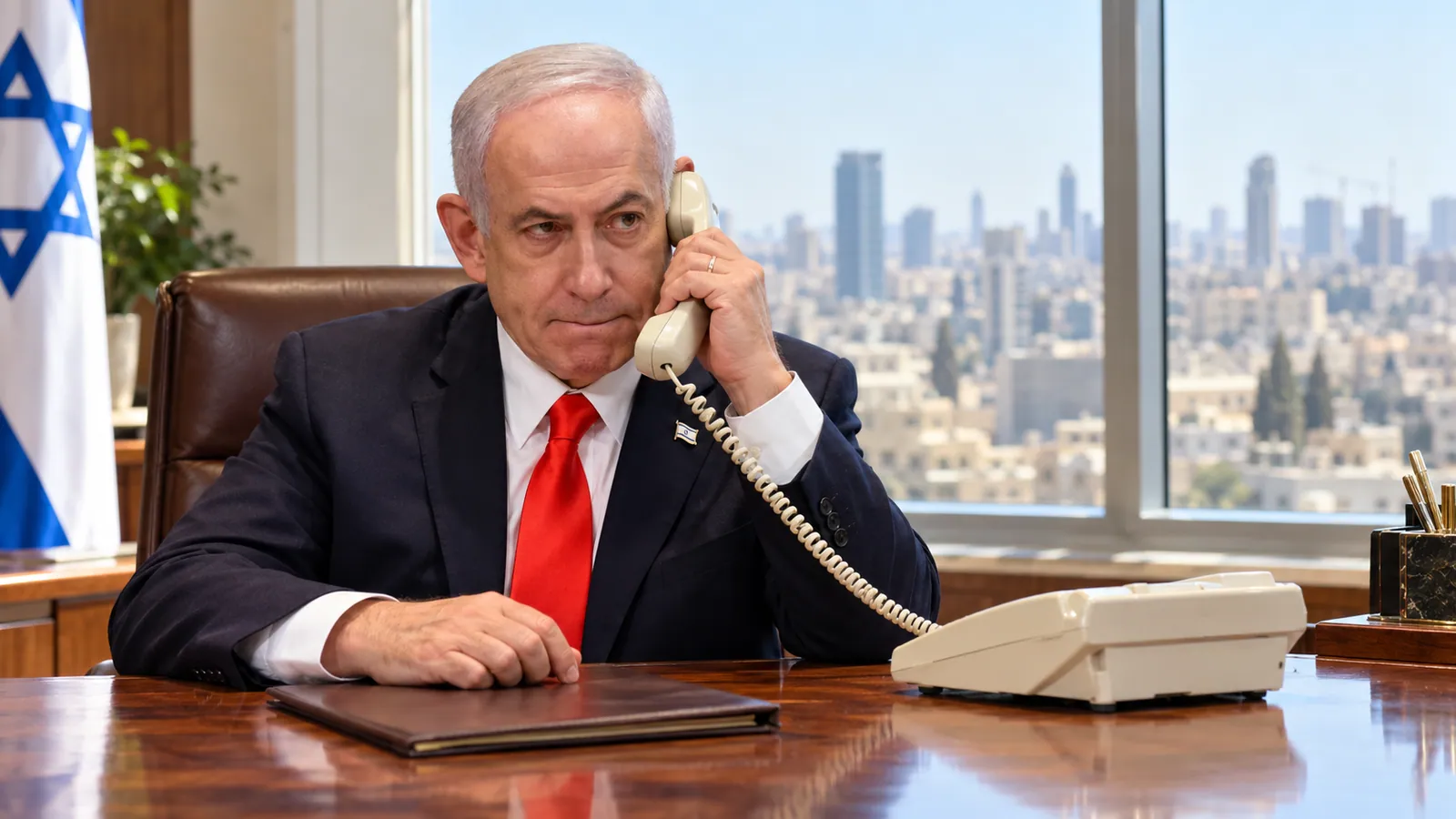
Israeli Prime Minister Benjamin Netanyahu was warned about a possible major Hamas attack in late September 2023, but he did not pass that warning to the heads of Israel's army and spy agencies, The New York Times reported on Friday. The warning came in a phone call from United Arab Emirates President Sheikh Mohammed bin Zayed Al Nahyan, only days before the Hamas attack of October 7, 2023, which started the Gaza war.
Netanyahu has strongly denied that any such call took place. But the new report supports an investigation that the Israeli newspaper Haaretz published earlier this month. It also comes just one month before Israelis go to the polls in a national election.
What the New York Times Reported
The Times based its story on two sources. One said they had spoken to Sheikh Mohammed himself. The other said they had been told about the call by someone who took part in it. Both said the Emirati leader told Netanyahu that Hamas was thinking about a major attack on Israel.
The warning was not detailed. According to the report, it did not say whether Hamas planned to fire rockets or send fighters across the border. It is also still not clear where the UAE first got the information.
Five former senior Israeli officials told the newspaper that the warning never reached the people in charge of Israel's security. They also said the call does not appear in the internal reviews that were later carried out into the failures of October 7. Those reviews have not been fully made public. All of the people who spoke to the Times asked that their names not be used.
The October 1 Meeting
The most serious new detail is about a meeting held on October 1, 2023. That day, Netanyahu called his security chiefs together to discuss the situation in Gaza. The Times said it reviewed the minutes of that meeting, and they show that Netanyahu did not mention the Emirati warning at all.
Instead, the minutes show that he wanted to keep Gaza calm. Some security officials said Israel should think about striking senior Hamas leaders in Gaza who were directing attacks on Israelis in the occupied West Bank. Netanyahu pushed back. He argued that military action in Gaza could hurt efforts to build diplomatic ties with Saudi Arabia, a deal he believed was close at the time.
Six days later, Hamas fighters broke through the Gaza border fence. About 1,200 people were killed in Israel and around 250 were taken hostage, according to Israeli figures. Israel's military response turned into a long war that has killed tens of thousands of Palestinians, according to Gaza health authorities, and destroyed large parts of the Strip.
How the Story First Came Out
The claim first appeared on September 8, when Haaretz published an investigation by journalists Shlomi Eldar and Ruth Yuval. It was taken from their upcoming book about the Israeli hostages. Haaretz reported that the call happened about ten days before the attack, lasted around 45 minutes and was made from the presidential palace in Abu Dhabi.
According to Haaretz, the UAE president said that Hamas leader Yahya Sinwar was planning a big move against Israel. The paper said Netanyahu reacted calmly, told him he believed Hamas would act in the West Bank, and assured him that Israel was ready. Haaretz also said the message traced back to Sinwar himself and was passed on through a Palestinian middleman. A former Palestinian Authority official, Sufian Abu Zaida, later said in a Facebook video that he was that middleman.
Netanyahu's office called the Haaretz report "an absolute lie." It said he did not speak with the UAE president during that period and received no warning from him. It added that any useful information from the UAE would have come through intelligence channels. Netanyahu also sent Haaretz a legal warning letter and threatened to sue for libel, but the newspaper said it stands by its reporting. Neither Netanyahu's office nor the UAE foreign ministry answered the Times' questions.
A Talk With the CIA Chief
The Times also reported that Sheikh Mohammed spoke about the September call months later, in a conversation with William Burns, who was then director of the CIA. A person who knows about that talk said the UAE leader told Burns he had warned Netanyahu about a coming threat of Hamas violence in Gaza or the West Bank.
The UAE has not confirmed the call in public. When the Emirati newspaper The National asked about it last week, an official UAE source said the country discusses security matters with other countries through the proper bodies and does not share such details.
Why It Matters for Israel's Election
Israel holds a general election on October 27. It is the first vote since the October 7 attack, and the question of who is to blame has become one of the biggest issues in the campaign. Netanyahu, who is seeking a seventh term, has placed the blame on army and intelligence chiefs. His critics say he must answer for his own decisions.
Opposition parties have demanded an independent state commission of inquiry, the strongest kind of investigation under Israeli law. Netanyahu's government has instead backed a committee chosen by politicians, which critics say would protect him. The new report is likely to put more pressure on him in the last weeks before the vote. The Times also noted that Israel's security leaders played down several other warning signs before the attack, so the failures were not his alone.
What It Means for Pakistan and the Region
For Pakistan, the story touches issues close to home. Pakistan does not recognise Israel and has long said it will not do so until an independent Palestinian state is created. Islamabad has condemned the war in Gaza many times and has called for a ceasefire and more aid for civilians.
The report also shows how closely Gulf states were linked to Israel's thinking before the war. The UAE set up formal ties with Israel under the Abraham Accords in 2020, and Saudi Arabia was in talks to do the same when the attack happened. Those Saudi talks stalled once the war began. Pakistan has deep ties with both the UAE and Saudi Arabia, and a very large number of Pakistanis live and work in the two countries, so any change in Gulf relations with Israel is watched closely in Islamabad.
For now, the key questions remain open. Netanyahu denies the call, the UAE has not confirmed it on the record, and Israel has not held an independent inquiry. Until that happens, the full story of what Israel's leaders knew before October 7 is likely to stay disputed.