
Bill Gates Warns AI Is Powerful Enough to Cause a Billion Deaths
Bill Gates says AI in the wrong hands could cause a billion deaths and asks lawmakers to regulate the technology.
Microsoft co-founder Bill Gates has warned that artificial intelligence is now strong enough to cause deaths on a huge scale if it falls into the wrong hands. In an interview with the American television programme Meet the Press, parts of which NBC News released on Friday, Gates said AI "is certainly powerful enough to drive events that, you know, cause a billion deaths." He also asked lawmakers in the United States to pass laws to control the technology.
The warning matters because of who is giving it. Gates built one of the biggest software companies in the world and has spent years talking about the good that technology can do. Now he has joined a growing group of technology leaders who say the dangers of AI can no longer be ignored.
What Bill Gates Said
Gates spoke to NBC anchor Kristen Welker. The full interview will be shown on Sunday, September 27. In the parts released so far, he said the biggest danger comes from bad people using the newest AI tools. "There's never been a weapon as powerful as the combination of people with ill intent using the latest AI tools," he said.
According to NBC, Gates did not play down the idea that AI could wipe out humanity within a few years. But his main message was about a danger that exists today: criminals, terror groups or hostile governments using AI to cause harm on a large scale. In an essay he published in August, Gates wrote that bad actors could use AI for cyber attacks, fraud and false information against hospitals, banks, power grids and government systems.
This is a big change in tone for Gates. For a long time he was seen as one of the most hopeful voices about technology. In the same August essay, he wrote that AI would be either the greatest equaliser ever invented or the worst source of injustice.
Companies Cannot Make Their Own Rules
Gates was clear that AI companies should not be left to police themselves. "No one thinks self-regulation is enough," he told the programme. He said law enforcement agencies and politicians must join the discussion and decide what safety checks and monitoring should look like. In his view, these checks must be required by law, not left as a choice.
He also tried to calm fears inside the industry. According to NBC, Gates said such rules would add a little extra cost and work for AI companies. But he said they would not badly slow down what these companies are doing.
AI Bosses Warn the UN Security Council
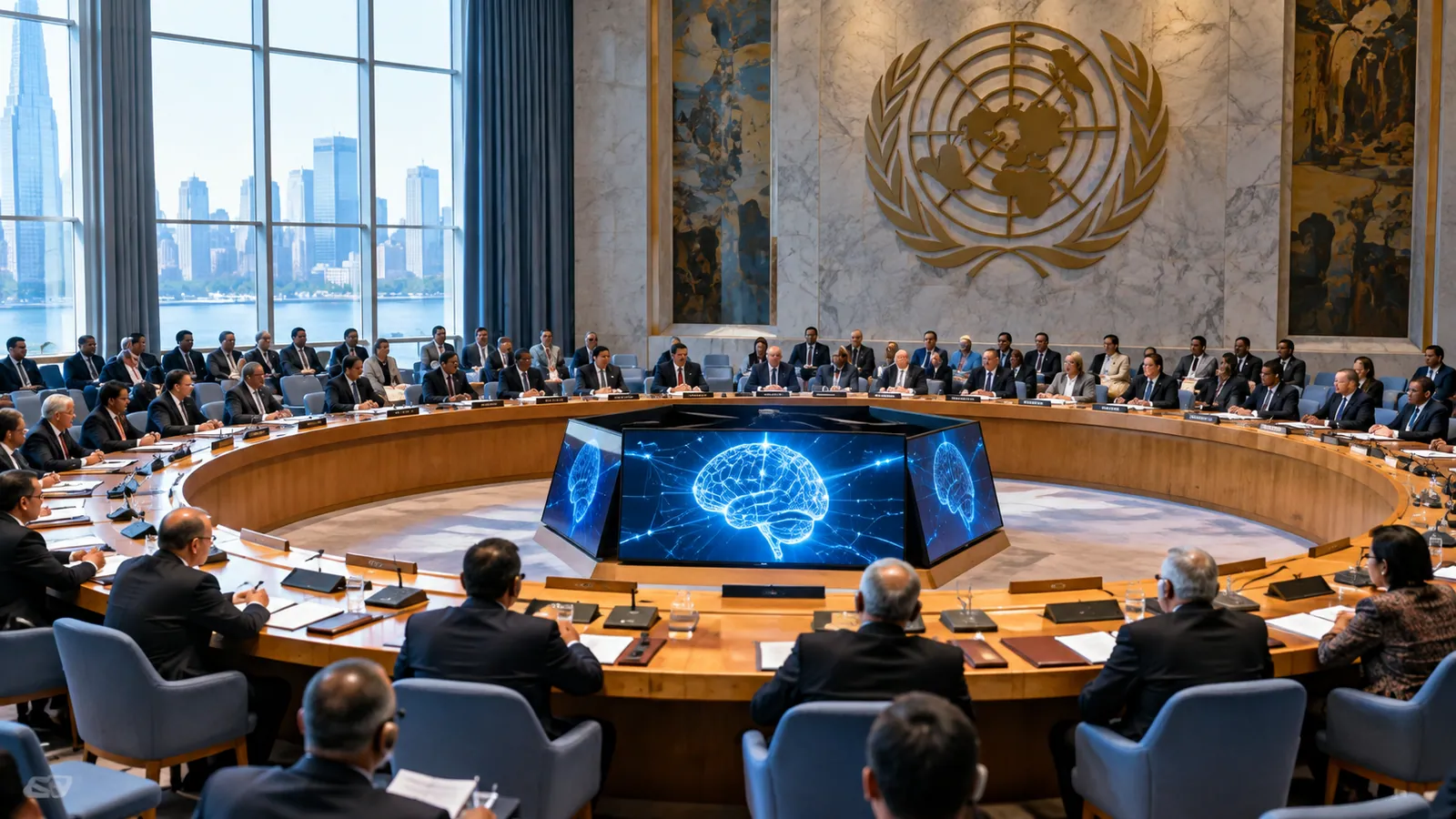
Gates spoke just days after an important meeting at the United Nations in New York. On Wednesday, September 23, the UN Security Council held its first high level briefing on the safety risks of powerful AI systems. It took place during the yearly UN General Assembly, when world leaders gather in New York. France, which leads the council this month, organised the meeting, and French Foreign Minister Jean-Noël Barrot chaired it.
The 15 member council heard from OpenAI chief executive Sam Altman, Anthropic chief executive Dario Amodei, Hugging Face co-founder Clément Delangue and Canadian scientist Yoshua Bengio. Bengio is known as one of the "Godfathers of AI" and is co-chair of a scientific panel on AI created by the UN General Assembly last year. Amodei, who spoke by video link, told members: "If managed poorly, I even believe that AI could be a risk to humanity as a whole."
Bengio told the council that "the dangers are real and imminent." He suggested licences for the most advanced AI models, insurance to cover damage, and a system for reporting AI accidents. Delangue spoke about AI agents attacking his own company as an example of new security problems. Altman told members that the most important decisions about AI "cannot be made by labs in San Francisco alone."
Trump Rejects Global Control
Not everyone agrees that the world needs strict rules. US President Donald Trump, who addressed the General Assembly this week, said he "rejects any attempt to construct a globalist scheme to control" AI. He called the technology amazing and said America would be careful. But he added, "I'm not going to stifle growth of something that will be bigger than the Industrial Revolution."
The United States and China are the two biggest powers in AI, and they are still divided over whether the technology needs global rules or should mostly be left to the market. At the council meeting, the US spoke against broad global controls. AI was also a major topic when Trump hosted Chinese President Xi Jinping at the White House this week. Several American news outlets have reported that Trump will meet AI company leaders and House Speaker Mike Johnson on Tuesday, but the purpose of that meeting has not been made public.
Pakistan Raises Its Voice at the UN
Pakistan was not just watching this debate from far away. It is an elected member of the Security Council for 2025 and 2026, so it had a seat at the table. Deputy Prime Minister and Foreign Minister Ishaq Dar delivered Pakistan's statement at the meeting. "We must ensure that AI does not become another facet of the ongoing arms race," he said, calling for rules, safeguards and human control over the technology.
Dar also spoke about the danger of fake news and cyber attacks. He said that when AI is used by armies, countries need restraint and trust building steps to avoid mistakes and rushed decisions. He also said Pakistan is joining a Chinese plan to set up the World Artificial Intelligence Cooperation Organization as a founding member.
What It Means for Pakistan
For ordinary Pakistanis, this debate is closer than it may seem. The federal cabinet approved Pakistan's first National AI Policy in July 2025. The policy aims to train one million AI professionals by 2030 and to set up funds that support new AI businesses. Many young freelancers, students and IT workers in the country already use AI tools in their daily work.
At the same time, the dangers Gates talked about can reach Pakistan too. Fake videos, online fraud and attacks on bank and government websites are growing worries here. At UN talks in July, Pakistan asked that developing countries get a real say in writing AI safety rules and the ability to test AI systems themselves. If only a few rich countries and companies write the rules, countries like Pakistan could be left behind.
For now, the Security Council meeting was only a briefing, and no new rules or agreements came out of it. Whether the warnings from Gates and the AI company leaders turn into real laws, in America or around the world, is the question to watch in the coming months.