
HyperOS 4: 5 Big Features Xiaomi Users in Pakistan Should Know
Xiaomi's HyperOS 4 brings a new glass design, smarter AI and faster speed. Here is what Pakistani users can expect.
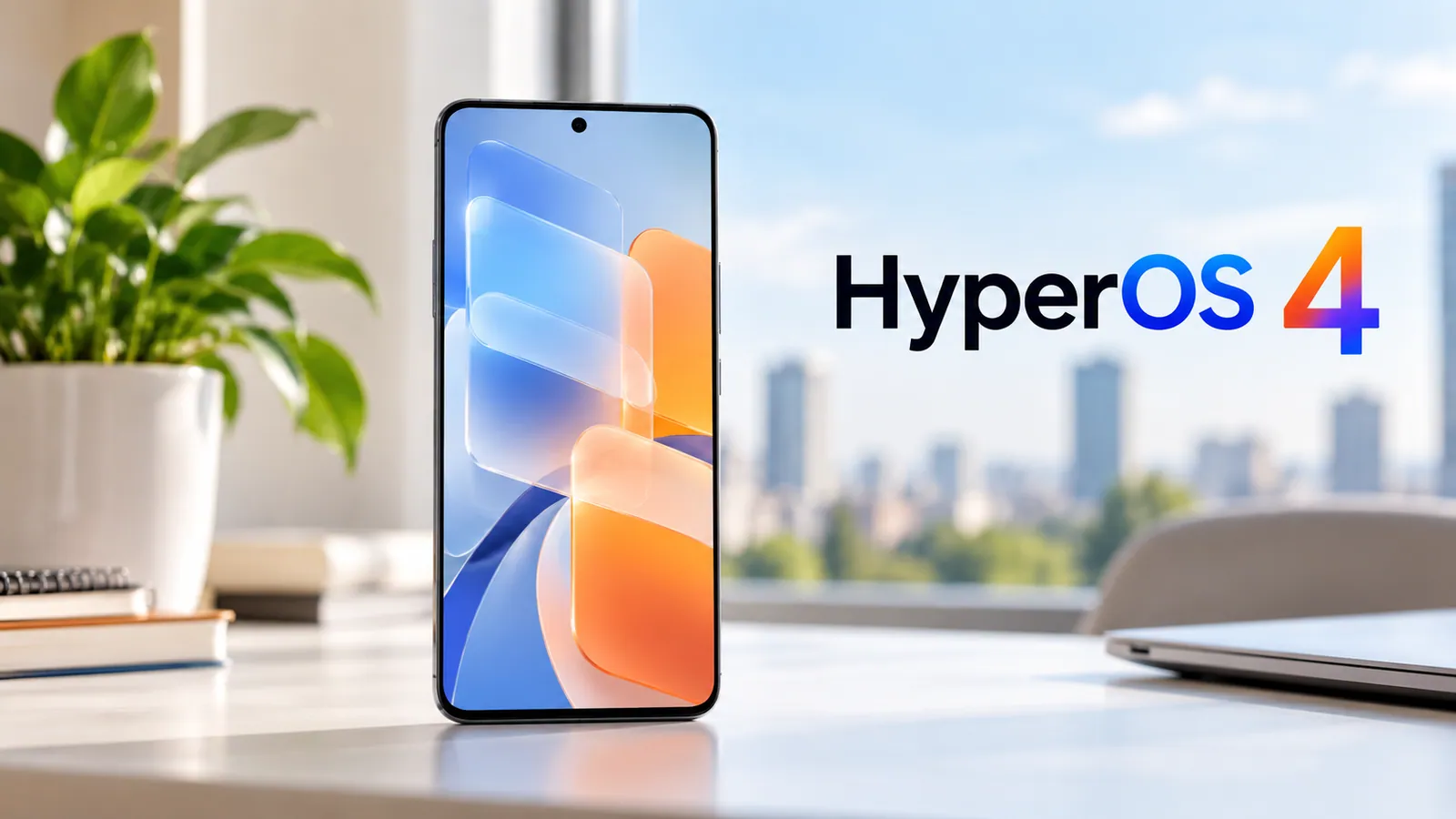
Xiaomi has started bringing its new phone software, HyperOS 4, to more users around the world. The update is based on Google's Android 17 and was first shown in China on August 13, 2026. On September 10, Xiaomi opened beta testing for global phones, the same type of phones sold in Pakistan. The new version brings a fresh look, a smarter AI assistant and better speed, and five changes stand out the most for everyday users.
What Is HyperOS 4 and Where Does It Stand Now?
HyperOS is the software that runs on Xiaomi, Redmi and POCO phones. It replaced the old MIUI system, and each year Xiaomi releases a bigger version on top of the newest Android. HyperOS 4 is the fourth version and the biggest design change in some time.
Xiaomi did things in two steps this year. In July, it gave stable Android 17 to the Xiaomi 17 and Xiaomi 17 Ultra, but kept the older HyperOS 3 look on top. The full HyperOS 4 experience came later, first as a beta test in China from mid August.
The global beta is now open for seven phones. The Xiaomi 17, Xiaomi 17 Ultra and Leica Leitzphone came first, while the Xiaomi 17T series and Xiaomi 15 series joined on September 17. On the same day, Xiaomi shared a stable update plan for China that runs until January 2027. A final date for the global stable update has not been announced yet.
A New Glass Look Across the Phone
The first thing users will notice is the new design, called Soft Light Glass. Menus, cards and panels now look like frosted glass. Light seems to bend through them, and the background shows softly from behind.
This style covers the lock screen, home screen, app icons, Control Centre, folders and widgets. Most phones that get HyperOS 4 will get the effect. However, the fuller version needs strong hardware. Xiaomi says deeper support is limited to phones with the Snapdragon 8 Elite, Dimensity 9500, Xiaomi's own Xring O1 chip, or newer top chips, so many budget Redmi owners in Pakistan will likely see a lighter version of the design.
Super XiaoAi 2.0 and Smarter AI Tools
The second big change is the AI assistant, Super XiaoAi 2.0. It runs on Xiaomi's own large language model, called MiMo V2.5. The assistant can now remember things for longer, work across different apps, and understand what is on your screen.
A new Expert Mode can handle tasks with many steps. For example, it can check your calendar and help you plan a trip. Xiaomi says it can also create research reports, PowerPoint slides, websites and videos from a single request.
There is also a new tool called Inspiration Ball. It reads what is on the screen and suggests a next step, such as opening a map, adding a calendar entry or finding a shopping link. The Recorder app and AI Voice Notes can now make summaries, pick out key points and create task lists.
Pakistani users should keep one thing in mind. These AI features were shown in China, and XiaoAi has so far been a China focused assistant. Xiaomi has not confirmed which of these tools will reach global phones.
Faster Speed and a Fresh Lock Screen
Speed is the third area. Xiaomi says HyperOS 4 uses AI to load apps into memory before you open them. The company claims 27.2 percent more free memory and 17 percent faster app opening after long use. Its updated HyperCore engine also cuts extra CPU work by about 14.4 percent compared with HyperOS 3.
Xiaomi also claims gallery scrolling is up to 90 percent smoother and the camera opens 200 milliseconds faster. HDR photo processing now takes 240 milliseconds instead of 310. Tech reports say Xiaomi also rewrote some core parts of the system in the Rust programming language. All these numbers come from Xiaomi's own lab tests, so real results will be different on each phone.
The fourth change is the lock screen. Users can now resize, stretch and move the clock freely. Notifications appear in neat stacked groups instead of many separate cards. A new depth effect can also place a person or object from your wallpaper in front of the clock and date.
Two Phones, One Set of Calls and Codes
The fifth feature is Dual-Phone Syncing. It lets two Xiaomi, Redmi or POCO phones share incoming calls and SMS verification codes in real time. It works over the internet, so the phones do not need to be on the same Wi-Fi or connected by Bluetooth.
Both phones must be signed in to the same Xiaomi account. The phone that receives the calls and codes must run HyperOS 4, while the other phone can stay on HyperOS 3. For now, the feature is only available in China.
It could be very handy in Pakistan, where many people carry two phones for work and home. Still, there is no confirmation yet that it will come here.
When Will Pakistani Users Get HyperOS 4?
Pakistan does not have its own separate Xiaomi software. Phones sold here use the Global ROM, so they will get HyperOS 4 on the same schedule as other global markets. Xiaomi usually starts global stable updates a few weeks after China. Flagship phones come first, followed by mid range and budget models.
This update matters a lot for Pakistan. Xiaomi held about 18 percent of the Pakistani smartphone market in the second quarter of 2025, second only to Transsion, the owner of Tecno and Infinix, according to figures reported by Profit. Many Redmi phones are also assembled locally at a factory in Kot Lakhpat, Lahore, run by Air Link's company Select Technologies since 2022. That means millions of Pakistani users are waiting for this update.
Users who want to try the beta early can apply through the Xiaomi Community app if their phone is on the list. But they should be careful. Beta software can have bugs, app problems, heating and faster battery drain. Going back to HyperOS 3 needs the phone to be flashed, which can delete all data, so for most people the stable update is the safer choice.