
Punjab EPA Deploys 67 Fire Units to Stop Stubble Burning
Punjab EPA has stationed 67 tractor fire units along motorways in 10 districts to catch crop fires before smog season.
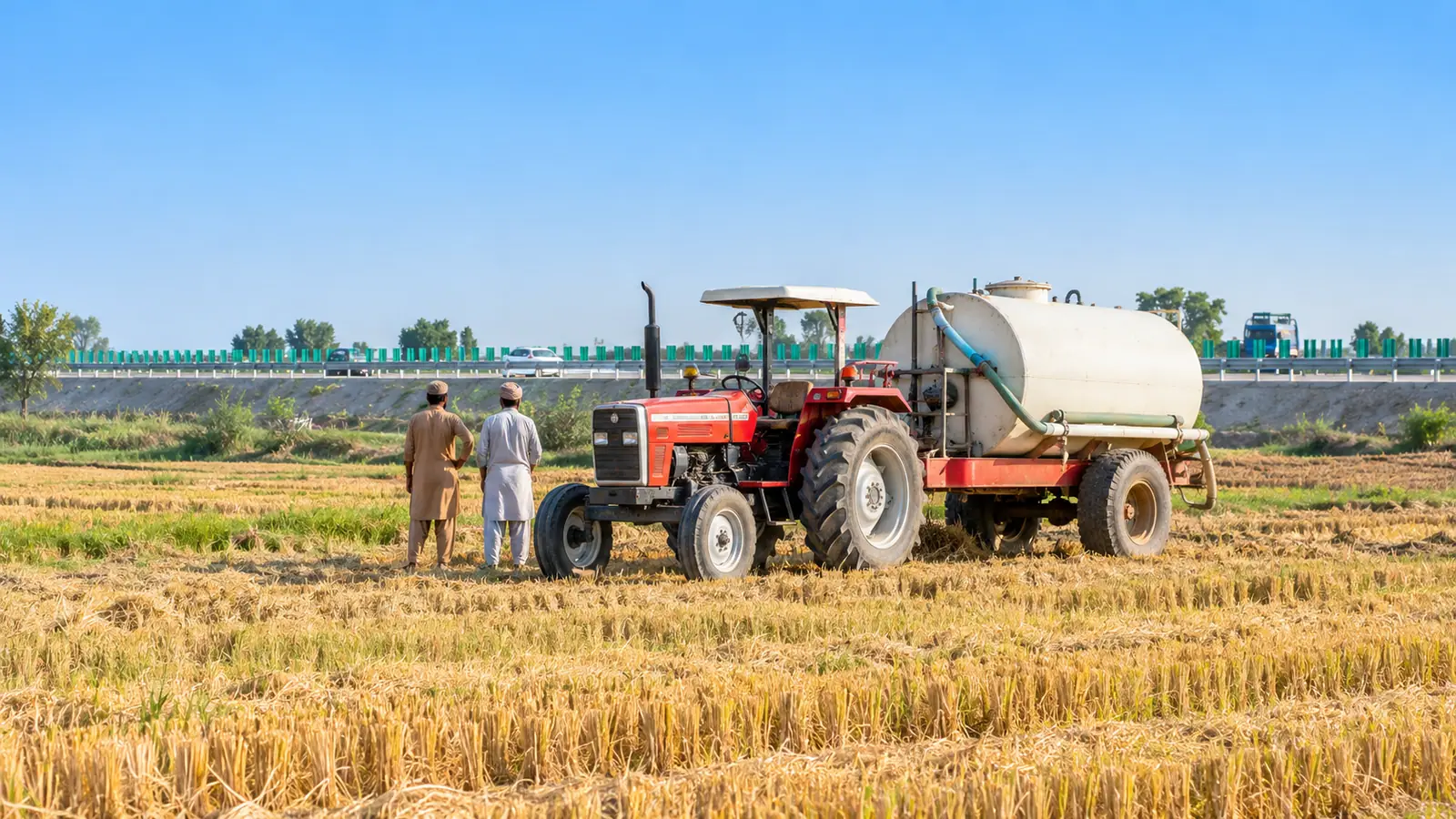
The Punjab Environment Protection Agency (EPA) has placed 67 Quick Response Units in 10 districts where farmers often burn crop waste, as the province tries to stop field fires before the smog season sets in. Each unit has a fire bowser pulled by a tractor, and the units are parked along the main motorways that pass through the rice belt. On Sunday, EPA Director General Abdullah Nayyer Sheikh made a surprise visit to the Gujranwala Sialkot Motorway to check whether the teams were really ready.
He found every unit standing at its fixed point, with staff present and able to move quickly if a fire was reported. On the same trip, he met agriculture department officials to review how the two departments are working together to watch the rice harvest and spot fields where burning could take place.
How the Units Find and Put Out Fires
The EPA says it is using three tools to locate farm fires: fire anomaly detection, drones and patrols on the motorways. Fire anomaly detection means satellite reports that show hot spots on the ground. Under rules the agency issued in June this year, these satellite reports come from SUPARCO, Pakistan's space agency, and are sent straight to the EPA's operations wing.
When a patrol team sees a fire, it uploads the location, photos and details on the Green Punjab app. The complaint goes to a focal person in that district, who sends the nearest response unit. The crew sprays water on the field to put the fire out before it spreads, and the district office must then upload proof of the action taken before the complaint can be closed. The EPA says this system was used over the last three days to find stubble burning cases and organise firefighting on the ground.
The patrols follow fixed routes set by the EPA. These include about 106 kilometres of the M2 from Ravi Toll Plaza to Pindi Bhattian, about 136 kilometres of the M11 between Lahore and Sambrial, the M2 stretch from Pindi Bhattian to Bhera, about 108 kilometres of the M3 from Sharaqpur to Jaranwala, the M4 from Faisalabad to Pindi Bhattian, and a road route from Kot Radha Kishan to Depalpur. The same order told EPA field offices in Lahore, Sheikhupura, Gujranwala, Faisalabad, Hafizabad, Sialkot, Sargodha, Nankana Sahib and Kasur to name officers for this work.
Built on Last Year's Plan
This is not the first time Punjab has tried this model. In an order dated October 7, 2025, the EPA said 67 Quick Response Centres would be set up in priority areas, with tractors carrying water tanks and motorcycles for fast field visits. The teams worked in day and night shifts so that a fire reported at any hour could get a response.
The tractors and equipment now in the field were bought under a provincial development scheme called "Establishment of Environment Protection Force in 10 Zones of Punjab". This year the units have also been tied to motorway patrols and the Green Punjab app, so that every reported fire leaves a record that senior officers can check.
Why Rice Stubble Matters for Smog
Districts such as Gujranwala, Sheikhupura, Hafizabad and Sialkot are known for growing basmati rice. After the rice is cut in October and November, farmers have only a short time to clear their fields and sow wheat. Burning the leftover stalks is the quickest and cheapest way to do this, but the smoke adds to the thick smog that covers Lahore and nearby cities every winter.
The air has already started to get worse. EPA data showed Lahore's Air Quality Index (AQI) reached 295 on the morning of October 3, close to the "very unhealthy" level, according to The Express Tribune. Last year, Lahore's AQI crossed 400 in late October, and the EPA said at the time that smoke from crop burning and Diwali fireworks in India had been carried across the border by the wind. Smog in Punjab usually begins in late October and is at its worst from November to January.
Fines for Farmers and a Wider Crackdown
Burning stubble is banned in Punjab under the Punjab Environmental Protection (Smog Prevention and Control) Rules 2023. Under these rules, the fine for a first offence starts at Rs15,000 for up to one acre and rises with the size of the burnt area. A second offence costs double, and the fine falls on the owner or the person using the land, not only on the one who lit the fire. Officers can also seal sites and register criminal cases.
The fire units are only one part of the EPA's campaign before the smog season. The agency says it has inspected 2,710 brick kilns, demolished 51, sealed another 51 and registered 45 FIRs, with fines of Rs10.4 million. It has also inspected 1,510 factories, sealed 41 of them and imposed fines of Rs4.1 million.
People who see a field on fire can report it to the EPA helpline 1373 or through the Green Punjab app. If a fire is spreading towards homes, Rescue 1122 should be called first.
The EPA says the aim is to catch fires early and respond fast so they do less damage to the air. The real test will come in the next few weeks, when the rice harvest reaches its peak. Whether these units bring a clear drop in stubble burning this season will only be known once the harvest is over.