
E-Scooter Battery Blast Burns Bus at GC Women University Faisalabad
A scooter battery exploded while charging at GC Women University Faisalabad, burning a bus and seven scooters. Nobody was hurt.
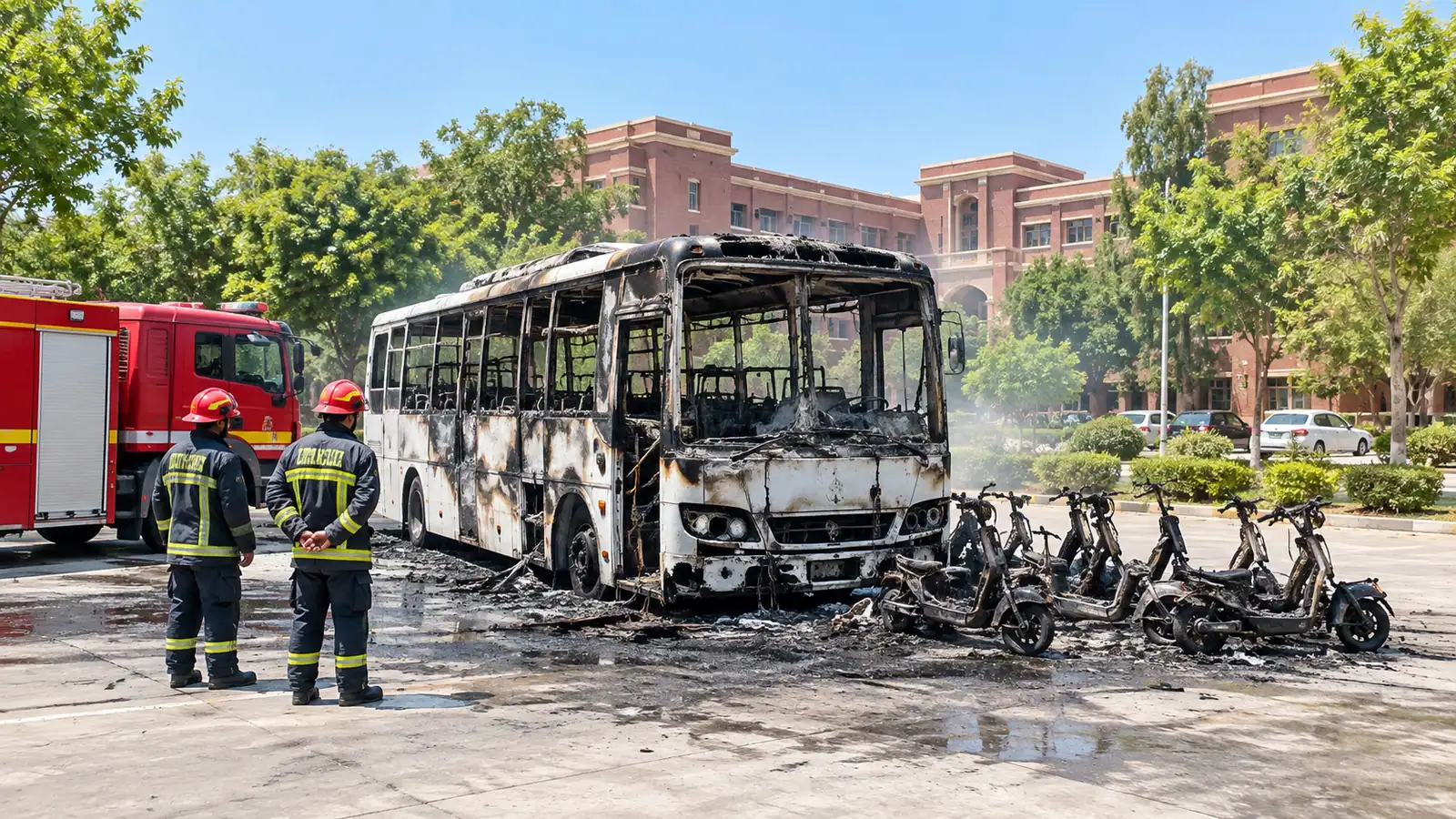
The battery of an electric scooter exploded while it was being charged in the parking area of Government College Women University Faisalabad (GCWUF) on Wednesday. The blast started a fire that burned a university bus and seven other electric scooters parked nearby. Nobody was hurt.
Rescue 1122 teams reached the campus and brought the fire under control. The university's own fire alarm system had already warned security staff, and they cleared people out of the parking area before the firefighters arrived.
What Happened at the University
According to the details shared so far, the fire began when one scooter's battery burst while it was plugged in for charging. The flames then spread to other scooters parked in the same area and to a university bus standing close by. The bus and seven scooters were destroyed.
Rescue 1122 spokesperson Faisal Anwar said the rescue teams contained the fire after they reached the university. The university's communication officer, Dr Ammara Javed, said the quick response helped prevent any loss of life. She also confirmed that the bus and the scooters could not be saved.
Officials have not yet said what made the battery fail. It is also not clear which company made the scooter, how old it was, or whether it was bought under a government scheme. These details had not been made public at the time of writing.
Why the Fire Has Raised Concern
The main question after the fire is where electric scooters are being charged on campuses. In this case, a scooter was charging in a parking area where a bus and many other scooters stood close together. When one battery caught fire, there was nothing to stop the flames from moving to the next vehicle.
People in Faisalabad have seen the danger of battery fires before. In June 2024, a laptop battery exploded while charging in a house on Satyana Road in the Shareef Pura area. Two children died and seven family members were injured. That was a home and not a campus, but the cause was similar: a lithium battery that failed while on charge.
Thousands of New E-Bikes Are Coming
The fire comes at a busy time for electric bikes in Punjab. Under the Chief Minister's E-Bike Scheme 2026, the provincial government is giving electric bikes to students of schools, colleges and universities. Applications opened on September 5, and students can apply until October 4, 2026, through the official portal at bikes.punjab.gov.pk.
Officials first spoke of 100,000 bikes. At a meeting in early September chaired by Chief Minister Maryam Nawaz, the number was raised to more than 125,000. Students will pay a monthly instalment of around Rs3,000 with no down payment, and the government will pay the interest and insurance. The chief minister also told officials to deliver bikes to eligible students within six weeks. This means many new e-bikes could soon be parked and charged at college and university gates.
Officials have said the scheme's bikes will use lithium iron phosphate (LFP) batteries. This type of battery is generally seen as less likely to catch fire than some other lithium batteries. Each bike is said to have a 72 volt, 30Ah battery and a 1,000 watt motor. Students will also get free helmets and a free two-day riding training.
Charging points are growing too. In October 2025, the Punjab Higher Education Department and the Energy Department signed an agreement to put solar power in 355 public colleges, including 179 women's colleges. The Rs2.94 billion project will be completed in three phases by 2028 and includes 135 charging stations for students' electric bikes.
How to Charge an E-Bike Safely
Fire services in many countries give similar advice about charging e-bikes and e-scooters. Use only the charger that came with the bike. Do not charge the battery near things that burn easily, and unplug the charger once the battery is full. Do not leave a battery charging for hours with nobody around.
Stop using a battery that looks swollen, gets very hot or makes a hissing sound. Do not use cheap copies of chargers or batteries, and do not overload sockets with extension boards. If a battery starts smoking or catches fire, move away from it and call Rescue 1122 on 1122.
No official inquiry report has been announced so far. It is also not known whether the university or the Punjab government will change charging rules on campuses after this fire. The concerns raised after the fire focus on one point: charging areas should be kept away from parked vehicles and anything else that can burn. This time, the fire alarm at GCWUF gave people enough time to get out safely.