
Pakistan IMF Talks Begin Today for $1.2 Billion Loan Tranche
Pakistan and the IMF begin formal talks in Islamabad today that could release about $1.2 billion by December.
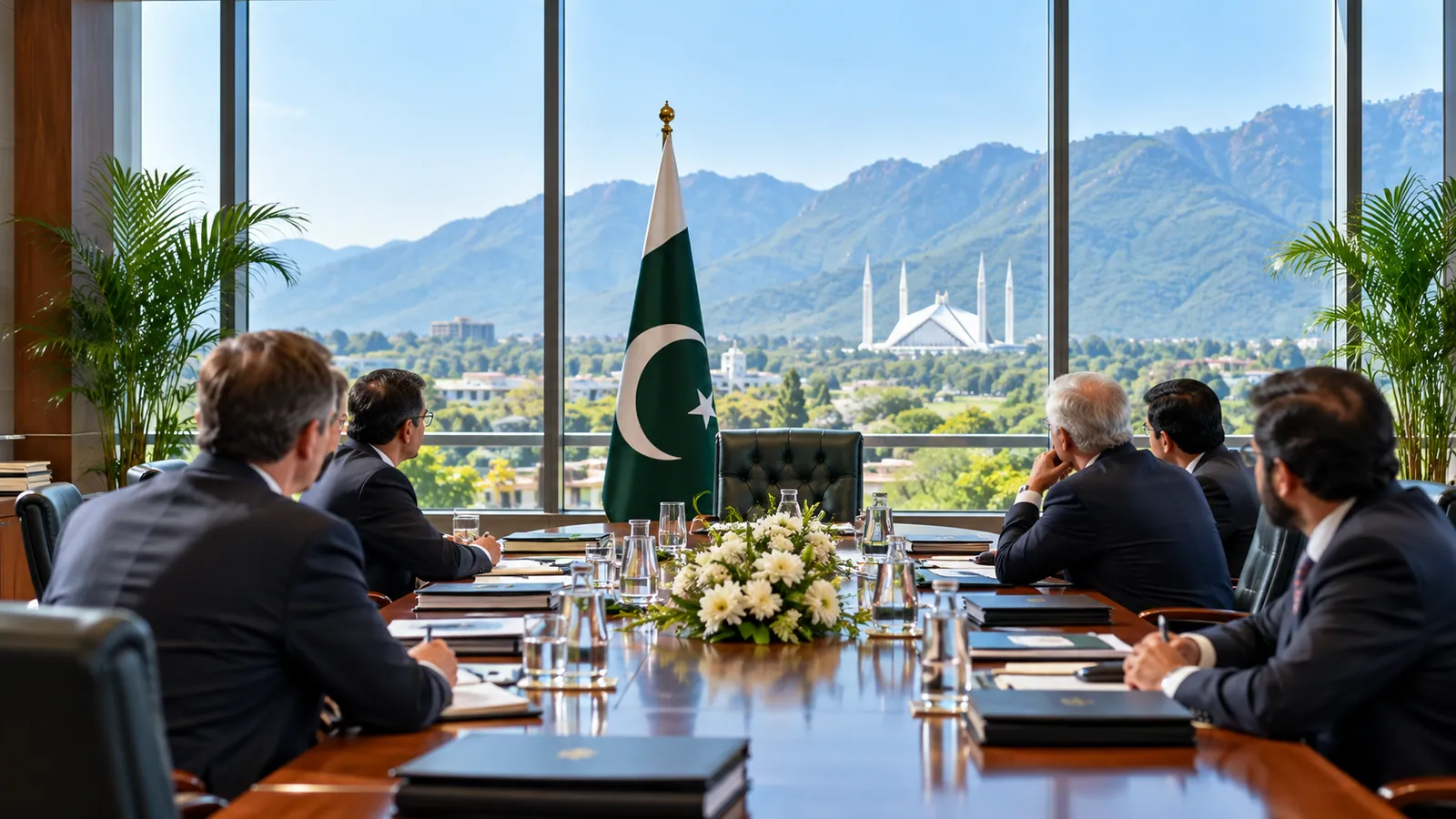
Pakistan and the International Monetary Fund (IMF) begin formal talks in Islamabad today, Monday, September 28, on the next part of the country's $7 billion loan program. If the talks go well, Pakistan could receive about $1.2 billion in fresh money before the end of the year. The IMF team is led by Iva Petrova, the Fund's mission chief for Pakistan, and it is expected to stay in the country until the first week of October.
The team is carrying out two checks at the same time. The first is the fourth review of the 37 month Extended Fund Facility (EFF), which is the main loan. The second is the third review of the Resilience and Sustainability Facility (RSF), a separate $1.4 billion loan linked to climate reforms. Both reviews look at how Pakistan performed up to June 30, 2026.
How the Money Will Come
If the IMF is satisfied, Pakistan could get around $1 billion under the EFF and about $200 million under the RSF. But the money does not arrive straight away. First, IMF staff and Pakistani officials must reach what is called a staff level agreement. After that, the deal goes to the IMF Executive Board in Washington for final approval.
If everything goes to plan, the money is expected by the end of November or early December. The IMF counts its loans in its own unit, called Special Drawing Rights (SDR). The main payment for this review is SDR 760 million, so the final dollar figure can change a little with exchange rates.
The IMF team actually reached Pakistan last week. It first held technical meetings with the State Bank of Pakistan and government departments. Today's round is the formal, policy level stage. Alongside the two reviews, the team is also doing its regular yearly check of Pakistan's economy, known as the Article IV consultation.
What the IMF Will Ask About
The list of topics is long. Government teams will brief the IMF on the Sovereign Wealth Fund, the current account, the primary surplus, foreign exchange reserves and the exchange rate. The Ministry of Energy will explain what it has done to cut circular debt, the chain of unpaid bills that has troubled the power sector for many years.
The Federal Board of Revenue (FBR) will face hard questions about bringing more people into the tax net. One key test is whether the FBR met its revenue collection target for the first half of the year, which is a formal benchmark under the program. The provinces will also meet the IMF to explain how they plan to raise more tax and non tax income.
The National Accountability Bureau (NAB) and the Federal Investigation Agency (FIA) will brief the Fund on steps against money laundering and terror financing. The IMF will also look at governance reforms. According to official reports, only a few of more than three dozen governance targets set for January to June 2026 were achieved.
Where Pakistan Has Fallen Short
The government says the program is being carried out well overall. Still, some promises have not been kept. The biggest one is the sugar sector. Under the program, Pakistan was supposed to fully free the sugar market by the end of June 2026. This means the government would stop fixing sugarcane prices, end crop zoning and allow new sugar mills to open.
That has not fully happened. Finance Secretary Imdad Ullah Bosal recently said three provinces have agreed to the change, while one province has raised objections. Earlier this year, the Sindh cabinet opposed the quick removal of zoning and the limits on new mills, saying farmers could suffer when cane prices fall. Pakistan will now have to explain this delay to the IMF team.
Targets on health and education spending have also been missed, according to finance ministry sources quoted in local media. These targets were meant to make sure that cost cutting does not hurt schools and hospitals. At the same time, the government says it is preparing a medium term tax reform plan so that tax rules do not keep changing every year.
The Road So Far
The current program was approved on September 25, 2024. Since then, Pakistan has cleared three reviews. The last one was approved by the IMF board on May 8, 2026, which released about $1.1 billion under the EFF and about $220 million under the RSF. According to the IMF, this took total payments under the two loans to about $4.8 billion.
In its staff report published in May, the IMF said growth picked up in the first half of the last financial year, inflation stayed under control and reserves were rebuilt faster than expected. But it also warned that the war in the Middle East had made the outlook very uncertain.
Last week in New York, IMF Managing Director Kristalina Georgieva met Prime Minister Shehbaz Sharif on the sidelines of the United Nations General Assembly. In a post on X, she said strong reform work had helped Pakistan protect stability, rebuild confidence and return to international markets. That is a good sign before the talks, but it does not promise a deal.
Why This Matters for Ordinary Pakistanis
Pakistan's economy looks much stronger today than it did in 2023, when the country came close to default. The State Bank's own reserves reached a record $21.4 billion on September 18, and total liquid reserves stood at about $26.8 billion. A large part of the recent jump came from money raised through a Eurobond earlier this month.
The outside picture, however, is difficult. The war that began in February with US and Israeli strikes on Iran has pushed up oil prices and disturbed shipments from the Gulf. Brent crude has recently traded around $105 a barrel. For a country that buys most of its oil from abroad, this means a bigger import bill and more pressure on petrol and electricity prices.
This is why the IMF program matters. A successful review keeps the door open for loans from other lenders and friendly countries, and it helps keep the trust of investors. On the other side, IMF conditions often bring higher taxes, fewer subsidies and costlier energy, which hit household budgets directly. Pakistan has gone to the IMF more than 20 times since joining in 1950, and many economists say the real test is whether reforms continue after the program ends.
What Happens Next
The talks are expected to run until early October. At the end, the IMF usually issues a statement. It may announce a staff level agreement, or it may say that talks will continue online, as happened during the last review in March, when the deal was only reached a few weeks later.
No official result has been announced yet. The final outcome will depend on how the IMF views the missed conditions, especially on sugar and social spending, and on the plans Pakistan puts on the table for the months ahead.