
China's EV Boom Shakes Up Pakistan's Car Market
China's record car exports and new EV policies are changing Pakistan's car market. Can Pakistan make parts, not just assemble?
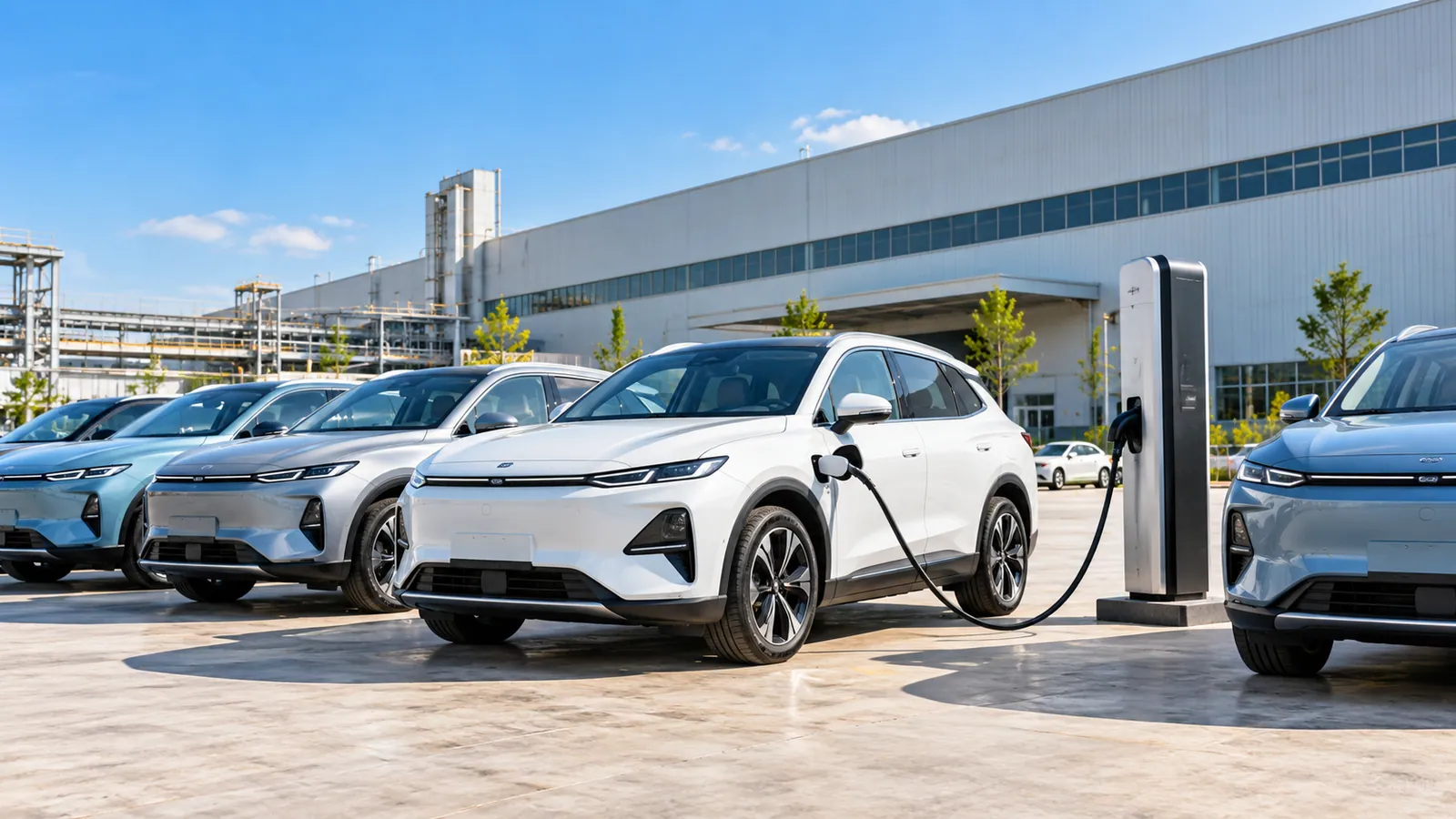
Chinese car companies are changing Pakistan's car market faster than many people expected. New data released in Beijing on September 10 shows that China exported 7.15 million vehicles in the first eight months of 2026. That is already more than the 7.1 million vehicles it sold abroad in the whole of last year. Pakistan is one of the countries where this wave is now landing, as Chinese brands push into a market that Japanese companies controlled for more than 30 years.
The timing matters. Pakistan's oil bill hit a record last year, fuel prices touched new highs, and the government has just given early approval to a new five year auto policy. The big question is simple. Will Pakistan only buy and assemble Chinese electric cars, or will it also learn to make their parts and sell them to the world?
China's Export Machine Keeps Running
According to the China Association of Automobile Manufacturers, China shipped 1.01 million vehicles abroad in August alone. It was the third month in a row that exports crossed one million. Exports of new energy vehicles, which means fully electric cars and plug in hybrids, rose to 526,000 units in August, more than double the level of a year earlier.
The main reason is weak demand at home, where sales have fallen for months while factories keep producing. At the same time, the United States, Europe and other markets have raised taxes on Chinese cars. Brazil, for example, has brought its import duty back to 35 percent.
So Chinese companies are sending more cars to Asia, Africa, the Middle East and Latin America. Chery alone exported about 1.3 million cars in eight months, nearly 70 percent of its total sales.
Japanese Grip on Pakistan Loosens
For decades, Pakistani buyers had three main choices: Toyota, Honda and Suzuki. High import duties protected these companies, and critics often said they had little reason to bring new models or modern features. Long waiting times and extra "own money" on new cars became a normal part of buying a car here.
That picture has changed. Sazgar's Haval now competes directly with the Toyota Fortuner, while Changan, Chery, BAIC and Jetour have built a strong presence in SUVs and crossovers. In electric cars, BYD entered the market in 2024 through Mega Motor Company, a unit of Hub Power (HUBCO). Changan's Deepal and budget models such as Honri, sold by Dewan, have taken electric cars beyond the luxury buyer.
Japanese companies are not giving up. They still have wide dealer networks and trusted parts suppliers, and they are launching more hybrids to protect their share. For buyers, this competition should bring better prices, more features and better after sales service.
BYD's Plant Near Karachi Nears Launch
The clearest sign of the shift is BYD's new factory in Gharo, Sindh, near Karachi. BYD and Mega Motor Company are investing about $150 million in the plant, which will be able to assemble around 25,000 vehicles a year. The company first planned to roll out its first local car in July or August 2026. Its latest update says the plant will now come online in the last quarter of this year, after equipment testing and production trials.
Until then, BYD is still bringing cars from China. More than 2,000 vehicles arrived on a single ship on July 17, the company's largest shipment to Pakistan so far. Its sister company HUBCO Green has also set up 19 public fast charging stations along a 1,300 kilometre route from Karachi to Peshawar.
BYD has said the plant will start by putting together imported parts, with only some simple, non electric parts made locally. That detail matters a lot for the economy.
Oil Bill and the New Policies
Pakistan's oil import bill reached $16.86 billion in the fiscal year that ended on June 30, 2026. That was about $1.58 billion more than the IMF had expected, because world oil prices jumped during the Middle East conflict. During that year, petrol climbed to Rs458.41 per litre and diesel to Rs520.35 per litre, both record levels. Petroleum alone made up about 22 percent of the country's total imports.
The government's answer is the New Energy Vehicle Policy 2025 to 2030. It aims for 30 percent of new vehicle sales to be electric by 2030 and 50 percent by 2040, along with 3,000 public charging stations. A levy of 1 to 3 percent on petrol and diesel vehicles will fund subsidies, and the charging tariff is kept at about Rs40 per unit, which also helps sell spare electricity from Pakistan's unused power capacity.
Earlier this month, Prime Minister Shehbaz Sharif gave in principle approval to the new Automotive Industry Development Policy 2026 to 2031, which replaces the old policy that ended on June 30. According to reports, it expects $17.7 billion in foreign exchange savings and $4.586 billion in vehicle and parts exports over five years. A Rs100.36 billion programme will give subsidies of Rs65,000 for electric bikes and up to Rs400,000 for electric three wheelers. The policy still has to be discussed with the IMF in October and then cleared by the ECC, the federal cabinet and Parliament, so some details may change.
Assembly or Real Manufacturing?
Experts warn of a hidden risk. If Pakistan only imports kits of Chinese batteries, motors and electronics and fits them together here, it will save on oil but spend more on parts. One import would simply replace another. Imports of road vehicles already rose 72 percent to about $3.1 billion in the first ten months of the last fiscal year.
To stop this, the new auto policy asks the Engineering Development Board to enforce a minimum level of local value addition. Pakistan cannot make battery cells or advanced chips any time soon, because these need huge scale and money. But local firms can realistically make battery packs, wiring, metal castings, plastic parts, seats, interiors and charging equipment.
Many analysts also believe the biggest gains lie outside private cars. Motorcycles, rickshaws, taxis and delivery vans run all day and burn a lot of fuel. Moving them to electric power, with battery swapping and fleet charging, could save more oil for each rupee of subsidy than helping richer families buy electric SUVs.
What It Means for Pakistan
For ordinary buyers, the Chinese push means more choice, more features and, over time, lower running costs. BYD claims its cars can cost up to 75 percent less to run than petrol cars, though real savings depend on electricity rates and how people drive. Charging stations are still few away from the main highways, which remains a worry for families in smaller towns.
For the country, the test is bigger. Chinese companies badly need new markets, so Pakistan can ask for training, technology transfer and local supplier deals in return for access. Master Changan has exported vehicles from Pakistan since 2023, so it can be done. If Pakistani factories can make parts the world wants to buy, the Chinese car boom could help the economy for years, but if not, the country may get new cars on its roads and keep the same old import problem.