
China US Agreement: Xi and Trump Agree on Trade, AI and Iran
Xi and Trump agree on a $30 billion tariff cut and AI talks, while Xi backs the Islamabad Iran deal.
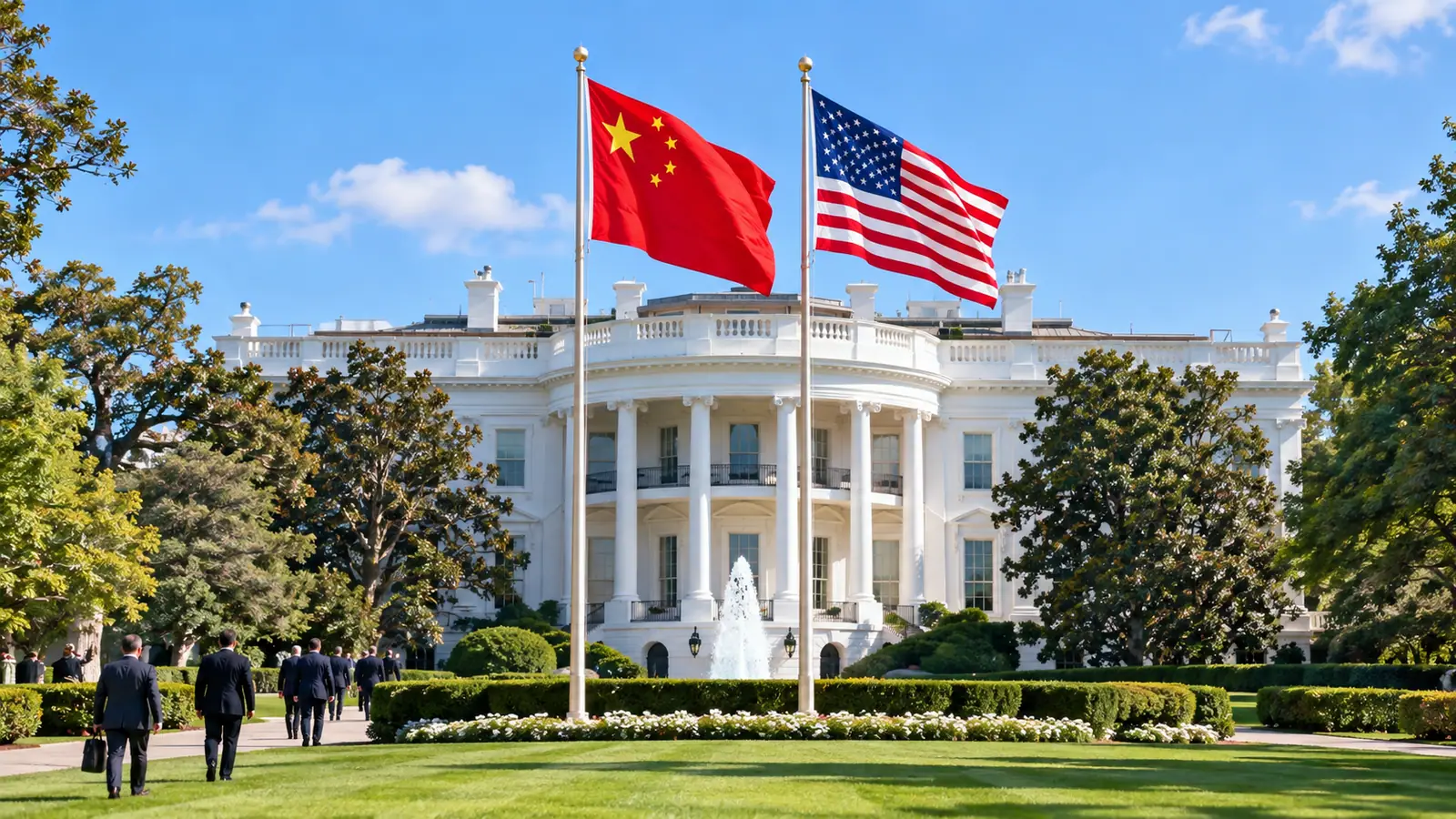
Chinese President Xi Jinping and US President Donald Trump have agreed to build what both sides call a "constructive relationship of strategic stability" between the world's two biggest economies. The agreement came during Xi's three day state visit to the United States from September 23 to 25. China's foreign ministry later said the two leaders reached eight agreements covering trade, artificial intelligence, military contact and the Iran conflict. For Pakistan, one point stands out. Xi asked the US and Iran to return to the Islamabad Memorandum of Understanding, the peace deal that Pakistan helped to make in June.
A Warm Welcome in Washington
This was Xi's first visit to the White House in 11 years and his second state visit to America, after 2015. Trump went himself to Joint Base Andrews near Washington to receive the Chinese leader and his wife Peng Liyuan. It was a return visit after Trump went to Beijing in May.
The three days were full of ceremony. There was a state dinner, tea and a tour of the National Archives. Trump called the visit "very productive" and said American farmers would be pleased with the result. Still, the White House shared few details in public, and most of the list of agreements was released by Beijing.
Chinese Foreign Minister Wang Yi told reporters that Xi and Trump have met in person three times and spoken on the phone five times since Trump started his second term. He said the new relationship will rest on respect, fairness and reciprocity. In simple words, China wants the US to respect its system and treat both countries as equals.
$30 Billion Tariff Cut on Trade
The biggest economic news is a reciprocal tariff cut. Each country will lower import taxes on about $30 billion worth of goods from the other side. China's Commerce Ministry said more than 90 percent of the listed products will return to normal "most favoured nation" rates, which means the extra trade war tariffs on them will go. The cuts will start at the same time once both governments finish their legal steps. No start date has been announced yet.
According to the White House, American goods getting cheaper entry into China include farm products, seafood, wood, cosmetics and medical devices. Chinese goods getting relief in the US include small home appliances, toys, holiday decorations and children's car seats. The White House also said China will buy at least 10 million tonnes of American coal in 2027 and again in 2028.
The two sides also set up a Board of Trade, a new council to sort out trade problems. A working group on farm trade under this council is due to hold its first meeting before the end of 2026. In addition, they extended the trade truce first agreed in Kuala Lumpur last year. That truce, which pauses some tariffs and other trade measures, was due to end on November 10. It will now run until January 10, 2027. Note that $30 billion is the value of goods covered, not the tax saved.
New Dialogue on Artificial Intelligence
For the first time, the two rivals agreed to start a formal China US AI Dialogue. Officials will meet to discuss both the risks and the benefits of artificial intelligence, and the next round is planned for November 2026. They will also open a special communication channel to handle incidents linked to AI.
Wang Yi said the two leaders agreed that their countries should use their own strengths instead of guarding against each other. They also agreed to work together to stop the misuse of AI. A direct line could help, but how much it will achieve is not yet clear.
Iran, Hormuz and the Islamabad Deal
On the Middle East, the two leaders agreed that Iran must keep its promise never to develop nuclear weapons. They also said no country or organisation should be allowed to charge tolls on international waterways. The statement did not name any waterway. However, the Strait of Hormuz, the narrow sea route between Iran and Oman, has been the main shipping trouble spot this year.
Wang Yi said Xi supported the US and Iran going back to the Islamabad Memorandum of Understanding and restarting talks for a full deal that covers the nuclear issue. This matters a great deal for Pakistan. After the US and Israel launched an air war on Iran on February 28, Pakistan hosted the Islamabad Talks in April, where US Vice President JD Vance met Iranian leaders. Pakistan and Qatar then helped both sides sign the memorandum on June 17. It called for an end to the fighting, the reopening of Hormuz and 60 days of talks for a final agreement.
The deal soon ran into trouble. In early July, after Iran attacked commercial ships in Hormuz and the US struck back, Trump said the memorandum was "over". Iran suspended its commitments later that month, and the 60 day deadline passed on August 17 without real talks. Since then, Field Marshal Asim Munir and Interior Minister Mohsin Naqvi have travelled to Tehran to try to bring it back to life. Open support from China now adds fresh weight to Pakistan's peace effort.
What It Means for Pakistan
Pakistan calls China its all weather friend, and Beijing is the main investor in CPEC. At the same time, Islamabad has grown much closer to Washington since Trump returned to power. Calmer ties between the two giants make this balancing job easier.
Peace in the Gulf matters even more for ordinary Pakistanis. Pakistan buys most of its oil and a large share of its LNG from Gulf countries, and much of it travels through the Strait of Hormuz. Any trouble there quickly pushes up petrol prices, electricity bills and the cost of daily goods at home. If both China and the US push for talks, the chances of a calm sea route get better.
There is a trade side too. Lower tariffs between China and the US could steady the world economy, which is good for Pakistan's exports. The direct effect on Pakistan looks small for now, and the full product lists are not public yet.
Pandas, Students and the Next Meetings
The visit also brought some friendly gestures. China is lending two giant pandas, Ping Ping and Fu Shuang, to Zoo Atlanta. Xi also invited 100,000 young Americans to visit China for study and exchange programmes over the next five years.
The two militaries agreed to sign a crisis communication agreement "as soon as possible". Both sides also praised joint police work against drugs, and China said dozens of suspects have been arrested.
Xi and Trump are expected to meet again soon. China hosts the APEC leaders' meeting in Shenzhen later this year, and the US hosts the G20 summit, which is expected at a Trump property in Miami. The real test will be whether the tariff cuts start on time, whether the AI talks happen in November, and whether Washington and Tehran return to the table that Pakistan built.