
Trump Hosts Xi in Washington as US China Trade Truce Extended
Xi Jinping is in Washington for a state visit as the US and China extend their trade truce until January.
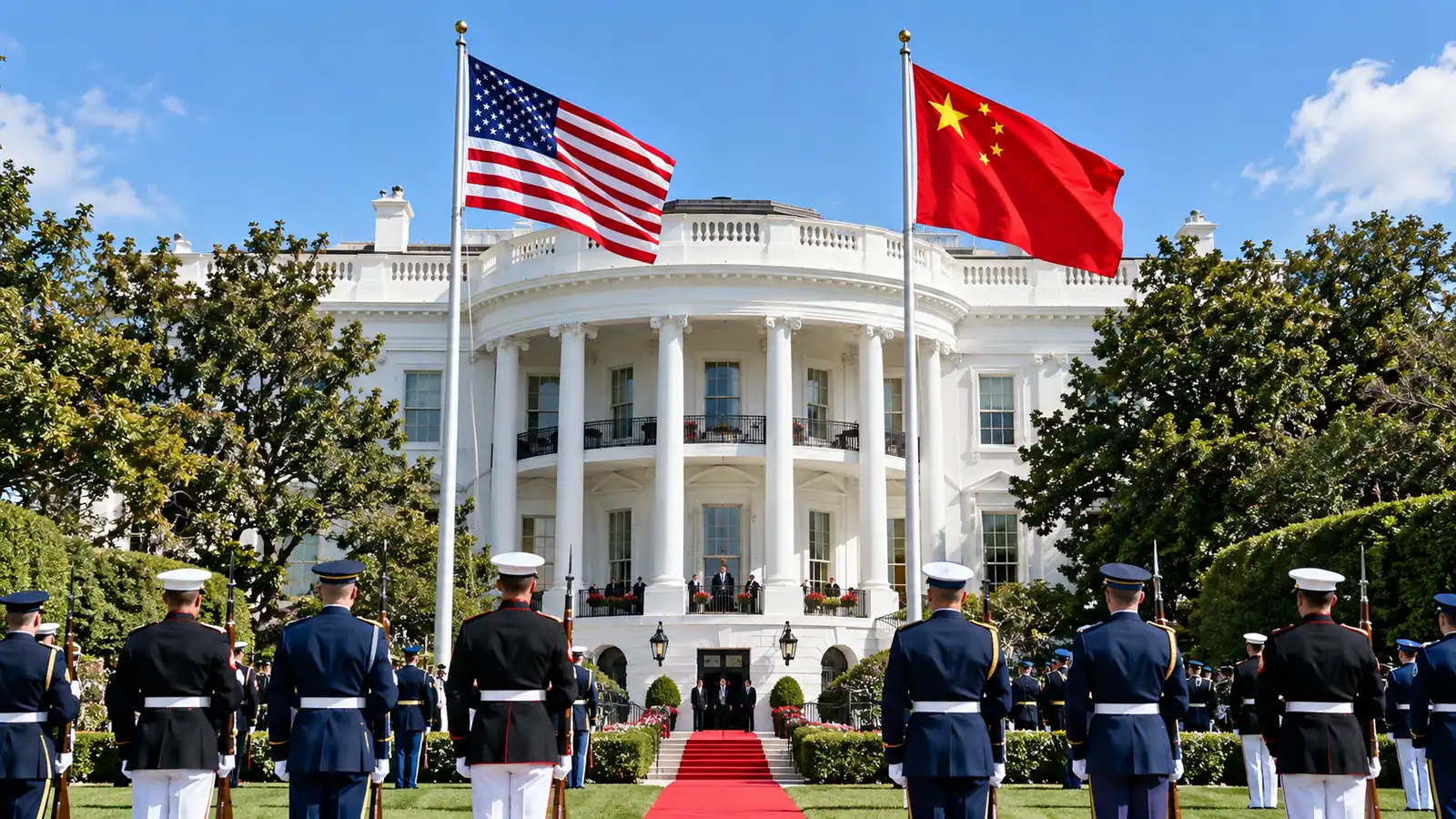
US President Donald Trump is hosting Chinese President Xi Jinping at the White House on Thursday, September 24, for a grand state visit. It is the first time Xi has come to Washington in more than ten years. Both lead the two biggest economies in the world, and both want to show that their relationship is calm, even though the two countries remain strong rivals.
Just before the summit began, the United States said both sides had agreed to extend their trade truce by two more months. The deal was due to end on November 10 and will now last until January 10. Experts say this may be the most solid result of the visit, because no major breakthrough is expected.
A Rare Welcome at the Airport
Xi and his wife Peng Liyuan landed at Joint Base Andrews, just outside Washington, on Wednesday evening. Trump and First Lady Melania Trump were waiting for them near the plane. According to C-SPAN, which tracks presidential events, no US president had greeted a foreign guest at Andrews since Barack Obama welcomed Pope Francis there in 2015.
A long red carpet was rolled out at the foot of the plane's stairs, with a military honour guard on both sides. In a statement carried by China's state news agency Xinhua, Xi said China and the United States "should be partners, not rivals."
The White House planned a large welcome ceremony on Thursday across the South Lawn, the State Floor and the Rose Garden, with 479 military personnel from every branch of the US forces. The day ends with a formal state dinner. On Friday, the two leaders are due to have tea together and then visit the National Archives in Washington.
Returning the Favour From Beijing
The visit is Trump's way of paying back the grand welcome he received in Beijing in May. During that trip, Xi hosted him at the Great Hall of the People, and Trump invited Xi to Washington for September. The two leaders first met in Trump's second term in Busan, South Korea, on October 30, 2025. That meeting produced the trade truce that is now being extended.
Before it, the two sides had pushed tariffs on each other's goods above 100 percent, a level that nearly stopped normal trade. Treasury Secretary Scott Bessent announced the new extension on Fox News after an unscheduled meeting with Chinese Vice Premier He Lifeng. He said a bigger economic deal could come by January, but the current deal might also simply be rolled over again. He also said China had not fully delivered on some of its promises.
Many people had expected a longer extension of six months or more. Scott Kennedy of the Center for Strategic and International Studies told CNBC that the short extension suggests Washington is not happy with China's offers and wants to keep up the pressure.
What Else Is on the Table
People familiar with the plans say the talks could bring deals to lower some tariffs, fight drug trafficking and increase contact between the two militaries. Trump is also expected to ask China to free Americans held there. US Trade Representative Jamieson Greer said the lists of goods with lower tariffs could include Chinese consumer products on one side, and American energy, farm goods and medical devices on the other. He also said China was making progress on its promise to buy 200 Boeing aircraft, but did not say any new orders were close.
Artificial intelligence is another topic. Both countries worry about the misuse of AI, and officials have discussed sharing alerts about AI hacking attacks. Secretary of State Marco Rubio has spoken of early ideas for something like the "hotline" the two sides of the Cold War used to prevent dangerous accidents. Analysts, however, believe tough competition in AI will keep any deal mostly symbolic.
Top American business leaders are on the guest list for the state dinner, including Apple's Tim Cook, Nvidia's Jensen Huang, Tesla's Elon Musk and OpenAI's Sam Altman. Even so, people familiar with US plans say Trump is likely to keep strict limits on selling advanced American technology to China, limits that Xi wants eased.
Taiwan and Iran: The Hard Questions
Taiwan is the most sensitive issue. China claims the democratically governed island as its own, while the United States sells it weapons. Sources told Reuters that Xi is expected to press Trump to stop arms sales to Taiwan, possibly during Friday's visit to the National Archives. In return, China is reportedly offering to help put pressure on Iran. Neither government has officially confirmed these reports.
After the May summit, Trump said he was holding back an arms package for Taiwan worth about $14 billion and called it a good bargaining chip. This has worried US allies in Asia. They fear Washington may soften its support for Taiwan to win trade deals with China.
The war with Iran, now close to seven months old, is also likely to come up. It has pushed up energy prices around the world and hurt Trump at home ahead of the US congressional elections in November. So far, there is little sign that Beijing is ready to pressure Tehran, its partner, to accept US demands.
Who Holds the Stronger Hand
Many analysts believe Xi arrives in a stronger position. China's trade has grown fast, and it controls much of the world's supply of rare earth minerals, which are needed for phones, electric cars and weapons. Still, Xi has problems at home too, including weak spending by families and a long slump in the property market.
Former US Deputy Secretary of State Kurt Campbell said the meeting was less about detailed talks and more about two strong leaders showing their power. He compared it to ancient times, when one champion from each side would fight the other alone.
What It Means for Pakistan
For Pakistan, calm between Washington and Beijing is good news. China is Pakistan's closest ally and its partner in the China Pakistan Economic Corridor (CPEC), while the United States is one of the biggest buyers of Pakistani goods such as textiles. When the two powers clash, countries like Pakistan come under pressure to pick a side.
The Iran war hits Pakistan directly. Much of Pakistan's oil comes from Gulf countries and travels through the Strait of Hormuz. This week, the government raised the petrol price to Rs393.75 per litre, pointing to the war and unstable global markets. In July, Reuters reported that Pakistan was trying to restart talks between the US and Iran with China's backing. A real push by Trump and Xi to end the war could bring relief at Pakistani petrol pumps, but no such plan has been announced.
What Comes Next
The final results will only be clear after Thursday's talks. Another meeting between the two is likely this year, either at the Asia Pacific Economic Cooperation summit in China in November or at the G20 meetings in the United States in December. With the new January 10 deadline, trade talks between the two giants will go on in the weeks ahead.