
Petrol Price: Rs136 Per Litre Goes to Taxes, Levies and Margins
Petrol costs Rs254.96 a litre before charges but sells for Rs391.30. Here is where the extra Rs136 goes.
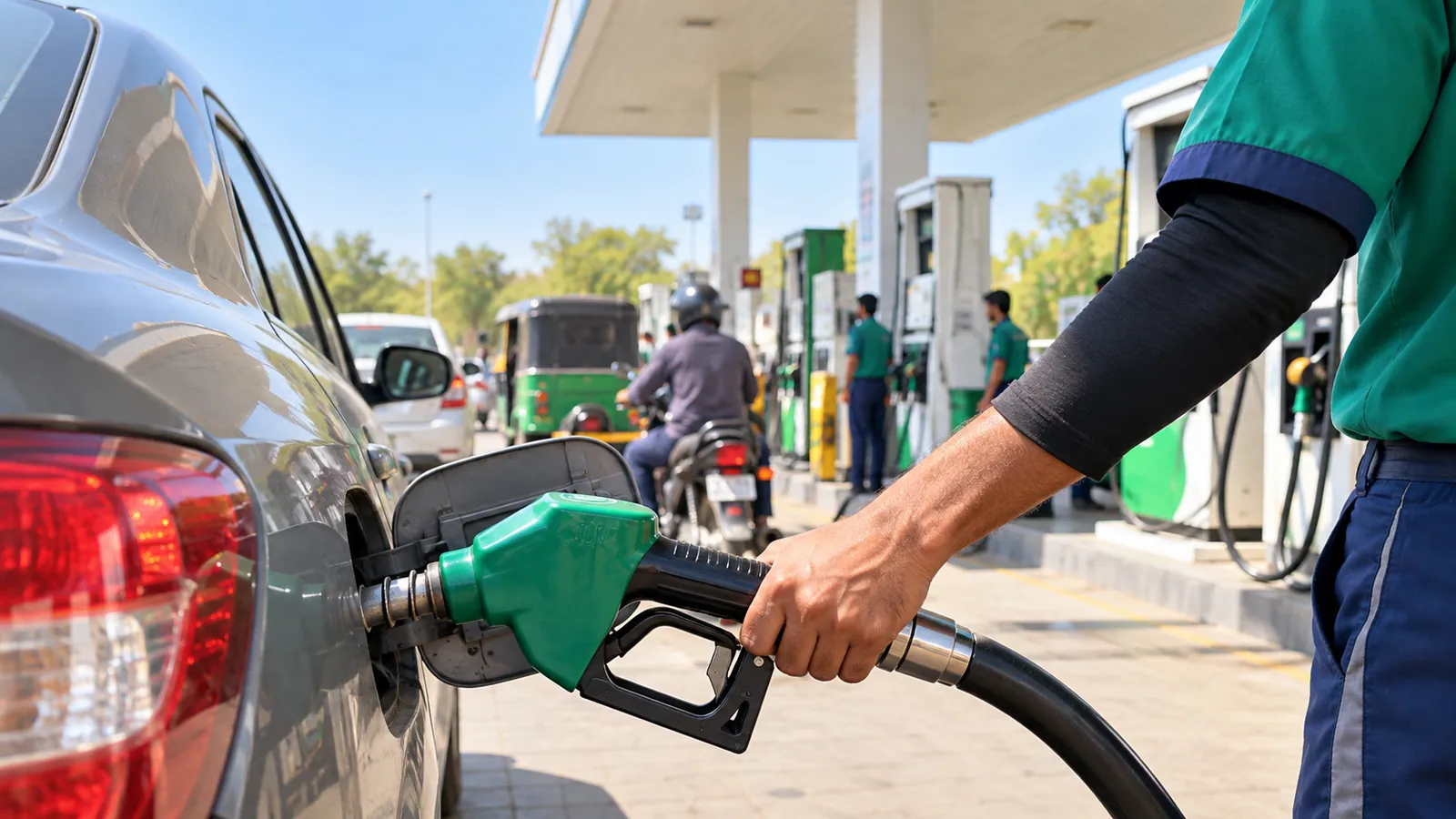
Around Rs136 of every litre of petrol sold in Pakistan has nothing to do with the cost of the fuel itself. New pricing figures from the Oil and Gas Regulatory Authority (OGRA) show that one litre of petrol cost Rs254.96 before government charges and company margins were added. At the pump, the same litre was sold for Rs391.30.
The gap of Rs136.34 per litre is made up of taxes, levies, freight costs and sales margins. Taxes, levies and margins alone add up to Rs134.44, which is about 34 percent of the pump price, or roughly one third. The remaining Rs1.90 is an exchange rate adjustment. These figures are for the price that was in force from September 26 to September 28, 2026.
Where Your Money Goes at the Pump
The biggest single charge is the petroleum levy. This is a fixed amount the federal government collects on every litre, and at the moment it is Rs80. On top of that, buyers pay a climate support levy of Rs5 and customs duty of Rs23.68 per litre. Together, these three government charges add Rs108.68 to each litre, which is close to 28 percent of the pump price.
The rest goes to the companies and people who carry and sell the fuel. Oil marketing companies get a margin of Rs7.87 per litre, and petrol pump dealers get Rs9.98 per litre. There is also Rs7.91 per litre for the Inland Freight Equalization Margin, known as IFEM. This charge pays for carrying fuel from Karachi to the rest of the country, so that petrol has one official price everywhere, whether you fill up in Karachi or in Gilgit.
Item (petrol, per litre) | Amount |
|---|---|
Base cost of petrol | Rs254.96 |
Petroleum levy | Rs80.00 |
Customs duty | Rs23.68 |
Climate support levy | Rs5.00 |
Dealer margin | Rs9.98 |
Inland freight margin (IFEM) | Rs7.91 |
Oil marketing company margin | Rs7.87 |
Exchange adjustment | Rs1.90 |
Pump price | Rs391.30 |
Put simply, for every Rs1,000 you spend on petrol, about Rs278 goes to government levies and duty. Around Rs66 goes to freight, company and dealer margins, and about Rs5 to the exchange adjustment. Only about Rs652 pays for the fuel itself.
Diesel Carries a Heavy Load Too
High speed diesel shows a similar picture. OGRA's working puts the base cost of diesel at Rs285.85 per litre, while it was being sold at Rs408.53. That means Rs122.68 was added to every litre, which is about 30 percent of the retail price.
Diesel matters to every family, even those who do not own a vehicle. Trucks, buses, tractors and many factories run on it. When diesel is costly, the price of moving wheat, vegetables, cement and most other goods goes up, and shoppers end up paying more in the bazaar.
Prices Now Change Every Day
These figures come at a time when fuel prices are changing almost daily. The government has left the old system of fixing prices every 15 days. Under the new system, OGRA works out prices using a seven day average of international oil prices, and the Petroleum Division then announces the new rate. Petroleum Minister Ali Pervaiz Malik has said this brings Pakistan in line with international practice.
The rules also say the petroleum levy cannot go above a limit set by the federal cabinet, and any change in the levy needs approval from the Finance Division. So the tax part of the price does not follow world oil prices. Only the base cost moves up and down each day.
On Monday, the government cut the petrol price by Rs2.27 to Rs389.03 per litre and the diesel price by Rs3.56 to Rs404.97 per litre for September 29. Business Recorder reported that the average Gulf price of petrol used in the calculation eased slightly to about $128.76 per barrel. World oil markets are still unsettled because of the US and Iran conflict and trouble around the Strait of Hormuz.
Levy Money and the IMF Talks
The petroleum levy has become one of the government's biggest sources of income. According to Finance Ministry data, Pakistan collected Rs1,567 billion from the levy in the 2025 to 2026 financial year, which ended in June. That was Rs99 billion more than the target of Rs1,468 billion. For the current year, the target has been raised to Rs1,676 billion.
The timing matters. An International Monetary Fund (IMF) team began talks with the Finance Ministry on September 28, and sources say the talks will continue until October 7. Levy collection and the government's petrol subsidy scheme are both part of the discussion. Pakistan is seeking the next loan payment under its IMF programme, and levy income helps it meet the fund's money targets.
Relief for Bikes and Small Cars
To ease the burden, the government is running a targeted fuel relief scheme, often called the Sasta Petrol scheme. It gives relief of up to Rs100 per litre to registered owners of motorcycles, rickshaws and cars with engines of up to 800cc. Speaking in Lahore on Sunday, Ali Pervaiz Malik said more than six million people have registered so far and the scheme is costing Rs35 billion to Rs40 billion a month.
The minister said the government could keep the scheme running for up to 10 months if needed, and could move Rs400 billion to Rs500 billion from its budget to pay for it. However, no approval for this larger amount has been announced yet. The Economic Coordination Committee had earlier approved Rs75 billion to run the scheme for three months.
What It Means for Ordinary Pakistanis
People who do not qualify for the subsidy, such as owners of bigger cars and commercial vehicles, pay the full price. The breakdown also shows why a fall in world oil prices does not bring an equal fall at the pump. Around Rs108 in government charges on every litre of petrol stays the same unless the government decides to change it.
For now, new prices will keep coming out every day, and buyers can check the latest rate on the OGRA website. Whether the government touches the levy, extends the subsidy or keeps both as they are should become clearer after the IMF talks end in early October.