
Netanyahu Makes Secret Abu Dhabi Visit to Meet UAE President
Netanyahu quietly flew to Abu Dhabi to meet the UAE President amid a storm over October 7 warnings.
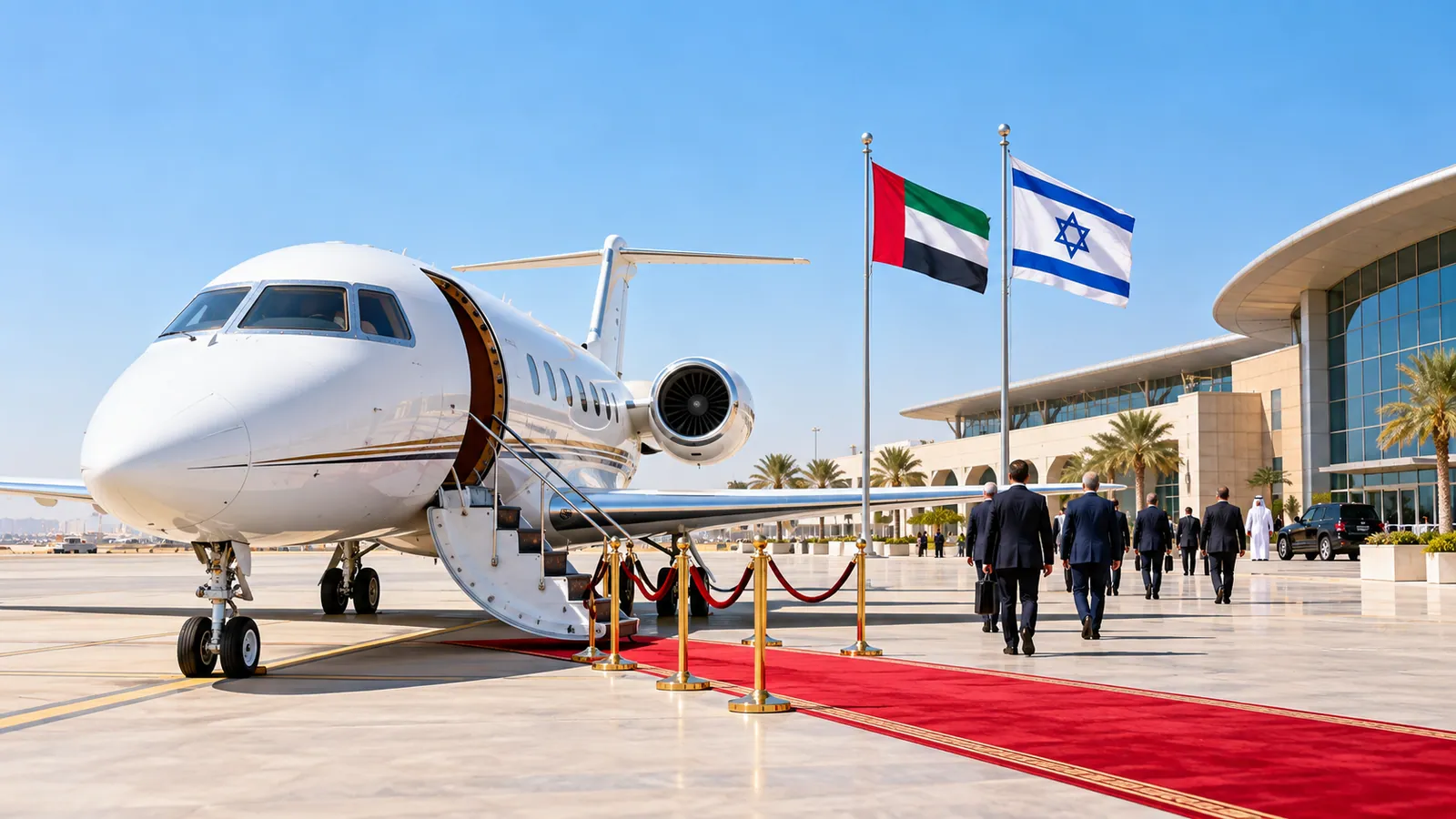
Israeli Prime Minister Benjamin Netanyahu made a quiet, unannounced trip to Abu Dhabi on Sunday, September 27, and met United Arab Emirates President Sheikh Mohamed bin Zayed Al Nahyan. A senior Israeli official confirmed the visit to Reuters. Neither Netanyahu's office nor the UAE foreign ministry has commented so far, and no official details of the talks have been shared.
The trip lasted only a few hours. But it has raised many questions, because it comes at a very difficult time for Netanyahu. Israeli media link the meeting to a growing storm at home over claims that the UAE leader warned him about the Hamas attack of October 7, 2023, and that he did not act on the warning.
A Short Trip on a Private Jet
Israel's public broadcaster KAN reported that Netanyahu did not use the official prime minister's plane. He flew on a private jet owned by an Israeli businessman whose name has not been made public. Senior Israeli figures have used the same plane for foreign trips before.
According to KAN, the jet left Ben Gurion Airport near Tel Aviv on Sunday afternoon and landed in Abu Dhabi at 3:10 pm local time. It took off again at 7:10 pm, exactly four hours later, and landed back in Israel shortly after 10 pm. KAN said Netanyahu had used the same aircraft for a visit to Abu Dhabi during the war with Iran earlier this year. The trip was first reported by Israel's Channel 12 News.
The Israeli newspaper Haaretz said sources in the UAE told it the two leaders met at the airport. Two people briefed on the trip told the paper the meeting lasted about one hour.
What Netanyahu Reportedly Asked For
The biggest claim about the meeting comes from Haaretz. Citing a person familiar with the matter, the paper reported that Netanyahu asked Sheikh Mohamed to publicly deny the newspaper's own earlier report about an October 7 warning. According to its sources, he also asked the UAE president to deny details of their phone call that could embarrass him, and asked for what one source called "moral support".
These claims come from unnamed sources and have not been confirmed by either government. The UAE has not said what was discussed, and Netanyahu's office has stayed silent.
The Warning That Shook Israel
The story began on September 8, when Haaretz published an investigation taken from a new book by its journalists Shlomi Eldar and Ruth Yuval. The report said Sheikh Mohamed called Netanyahu about ten days before October 7, 2023, and spoke with him for around 45 minutes. He reportedly warned that Hamas leader Yahya Sinwar was planning a major operation against Israel.
According to Haaretz, the warning started with a Palestinian middleman who was trusted by both Hamas and Israel's Shin Bet security agency. Sinwar reportedly told this man he was preparing an "earthquake". The message went to an adviser of the UAE president and then to Sheikh Mohamed himself. Haaretz said Netanyahu replied calmly, saying he believed Hamas wanted to act in the West Bank and that Israel was ready for anything.
The most serious part of the report is that the warning never reached Israel's security chiefs. Former Shin Bet head Ronen Bar and former army chief Herzi Halevi both told Haaretz they were never informed. Netanyahu's office called the report an "absolute lie", said he did not speak to the UAE president in that period, and threatened legal action against the newspaper.
On Friday, September 25, The New York Times added weight to the story. Two sources told the American paper that the UAE president had indeed warned Netanyahu of a coming major attack. The Times also reported on the record of an October 1, 2023 meeting, where Netanyahu told security officials that any Israeli action in Gaza could hurt the chances of a deal with Saudi Arabia.
Other reports say Egypt also warned Israel several times, including a secret visit by Egyptian intelligence chief Abbas Kamel in late September 2023. The Hamas attack killed about 1,200 people in Israel. More than 73,000 Palestinians have since been killed in Gaza, according to local health authorities.
Election Pressure at Home
The timing matters. Israel goes to a general election on October 27, and Netanyahu faces a tough race. Opposition leaders have long blamed him for the security failures before October 7, and after the Haaretz report some of them said he was no longer fit to serve.
A public denial from the UAE would help Netanyahu a lot. So far, Abu Dhabi has chosen its words carefully. It declined to comment on the Haaretz report, but said the two countries have kept "open and direct lines of communication" since they set up diplomatic ties in 2020. A UAE source earlier told Reuters that the Emirates discusses security matters with other countries through the relevant bodies, not at the level of national leaders.
A Pattern of Secret Meetings
This is not the first Netanyahu trip to the UAE to cause confusion. In May, his office announced he had secretly visited the Gulf country and met Sheikh Mohamed during the war with Iran. The UAE denied that such a meeting took place. A source later said the two men had met on March 26 in Al Ain, an oasis city in Abu Dhabi near the border with Oman.
The UAE itself came under attack during the Iran war, and since then it has moved closer to both the United States and Israel. The UAE and Israel opened relations through the Abraham Accords, a deal brokered by Donald Trump in 2020 that also brought in Bahrain and later Morocco. According to Reuters, the tie with Israel gives the UAE more influence in the region and a special channel to Washington.
What It Means for Pakistan
For Pakistan, the visit is another sign of how quickly the Gulf is changing. The UAE is one of Pakistan's closest friends. It is home to a very large Pakistani community and is one of the biggest sources of money sent home by overseas Pakistani workers. Yet on Israel, the two countries stand on very different sides.
Pakistan does not recognise Israel and has no diplomatic ties with it. Pakistani passports are valid for every country in the world except Israel. In May this year, President Trump said Pakistan and several other Muslim countries should join the Abraham Accords. Defence Minister Khawaja Asif rejected the idea, and Foreign Minister Ishaq Dar said in Washington that Pakistan's stance would not change without an independent Palestinian state.
Closer ties between Abu Dhabi and Israel could bring fresh pressure on Islamabad in future talks with Gulf partners and with Washington. For now, both governments are silent about Sunday's talks. The real test will come if the UAE makes any public statement on the October 7 warning, as that could shape Israel's election and the wider region.