
SpaceX Starship Reaches Orbit, Deploys 26 Starlink Satellites
SpaceX's giant Starship rocket reached orbit for the first time and released 26 new Starlink internet satellites on Monday.
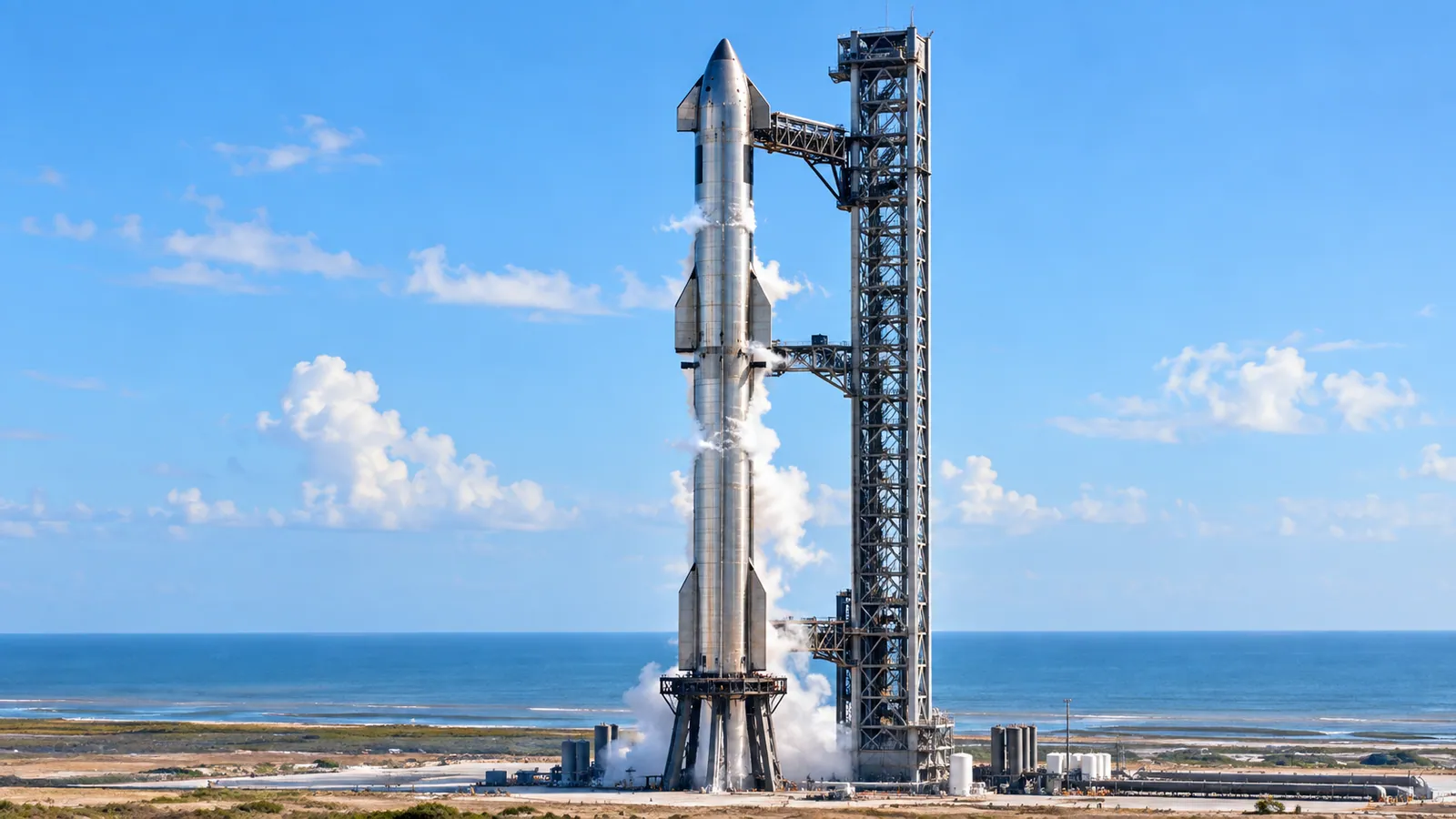
SpaceX's giant Starship rocket reached orbit around the Earth for the first time on Monday, September 28, after years of delays and 13 earlier test flights that fell short. The uncrewed rocket lifted off from the company's Starbase site in south Texas, near the town of Brownsville, in the morning local time, which was early evening in Pakistan. Once in space, it released 26 new Starlink internet satellites, the first real cargo Starship has ever carried into orbit.
The flight did not go perfectly. One engine on the upper stage shut down too early, and for a few tense minutes the company said the ship would not try for orbit. Then engineers changed their decision, and the rocket pushed itself into orbit anyway.
A tense few minutes in space
Starship has two parts. The lower part is a huge booster called Super Heavy, and on top sits the Starship vessel itself. Together they stand about 124 metres tall, roughly the height of a 40 storey building, and it is the largest rocket ever built.
After the booster pushed the ship into space, it fell back and made a controlled splashdown in the Gulf of Mexico. This was an improvement, because boosters on two earlier missions had hit the water hard. Then trouble started on the ship. One of its three main engines stopped earlier than planned, and SpaceX spokesperson Dan Huot told viewers on the live stream, "The team has made the call not to commit to orbit."
A few minutes later, Huot came back with better news. Engineers had checked the data and decided the ship could still fire one engine to climb into orbit. News reports say the new decision came about 22 minutes into the flight. The engine burn worked, and Starship began circling the Earth at about 28,000 kilometres per hour.
26 new Starlink satellites in space
Soon after reaching orbit, a door on the side of the ship opened and the satellites began sliding out one by one. These were SpaceX's new V3 Starlink satellites, the most powerful internet satellites the company has built so far. SpaceX later said it had made contact with all 26 of them, and Elon Musk wrote on X that they were working normally.
According to SpaceX, each V3 satellite can handle about 10 times more data than the older V2 mini satellites. Those older satellites go up 20 or 30 at a time on the smaller Falcon 9 rocket. Huot said Monday's flight was like 20 Falcon 9 flights in terms of internet bandwidth.
A fully loaded Starship is meant to carry 60 of these satellites, which SpaceX says is about 20 times the capacity one Falcon 9 launch can add. Musk wants to reach that level of routine launches late this year. Analysts estimate that this single launch adds network capacity worth hundreds of millions of dollars in future Starlink revenue.
Flight cut short, then a fiery splashdown
The plan was for Starship to go around the Earth six times over about 10 hours, its longest trip ever, and then come down in the Pacific Ocean west of Chile. That did not happen. Flight controllers brought the ship home after roughly three hours and only a couple of orbits, and the Associated Press reported that it came down in the Pacific north of Hawaii instead.
SpaceX did not immediately give a clear reason for ending the mission early. According to AP, the team simply chose to play it safe before trying longer flights. Coming back through the Earth's atmosphere is one of the most dangerous parts of any space trip, because the heat becomes extreme.
Starship survived the return and fired its engines to land upright in the ocean. The splashdown was rougher than on the last flight in July, and live video showed a big fireball over the water. SpaceX had not planned to recover the ship on this flight.
Years late, billions spent
Reaching orbit is the first big test for any new rocket, and Starship took much longer than promised. Musk once said it would reach orbit in 2022 and start launching satellites in 2023. Instead, all 13 earlier test flights since 2023 went up and came back down without completing an orbit, and several ended in explosions. The programme has cost SpaceX more than $15 billion so far.
The pressure on the company is now even higher. SpaceX became a public company in June with a record share sale, and its value stood at about $2 trillion at Friday's close. The listing made Musk the world's first trillionaire. When the 13th test flight was stopped at the last second in July, investors wiped about $100 billion off the company's value, although the rocket did fly five days later.
Starship also has a big job for NASA. The American space agency plans to use it in its Artemis programme, which aims to put astronauts back on the Moon for the first time since 1972. A docking practice in Earth orbit, called Artemis III, could happen as early as next summer, while a Moon landing using either Starship or Blue Origin's rival lander is planned for no sooner than 2028. Musk's long term dream is to use Starship to carry people to Mars.
What it means for Pakistan
For Pakistan, the most direct link is Starlink. More powerful satellites and cheaper launches mean more internet capacity from space, which matters most in places where fibre cables and mobile towers do not reach. Many villages in Balochistan, Gilgit Baltistan and other remote areas still have weak or no internet, which is why satellite service is often discussed as a possible solution.
However, Starlink is still not available in Pakistan. The Pakistan Space Activities Regulatory Board (PSARB) gave the company a provisional registration in March 2025, and in April 2026 the Pakistan Telecommunication Authority (PTA) introduced a new licence framework for satellite internet. But this month, the PTA told a Senate committee that Starlink's PSARB registration was still pending, and that the company can only apply for its licence after that step is complete.
No official launch date or price for Pakistan has been announced. People should be careful of websites or sellers asking for advance payments for Starlink connections. Other satellite companies, including Amazon's Kuiper and OneWeb, are also eyeing the Pakistani market, so users may get more than one choice once licences are issued.
What comes next
SpaceX has not yet said when Starship will fly again or what the next mission will look like. Future flights are supposed to bring the ship back to land in Texas so it can be reused, just like the booster. If that works, the cost of sending things to space could drop sharply, and Starship could start flying as often as Musk has long promised.
For now, Monday's flight is SpaceX's biggest win so far with this rocket. It was not a perfect mission, but the ship reached orbit, delivered real satellites and came back through the atmosphere in one piece.