
Madinah Power Station Attacked by Houthis, Saudi Coalition Says
A Houthi drone damaged a transformer at a Madinah power station that supplies the Prophet's Mosque, the coalition says.
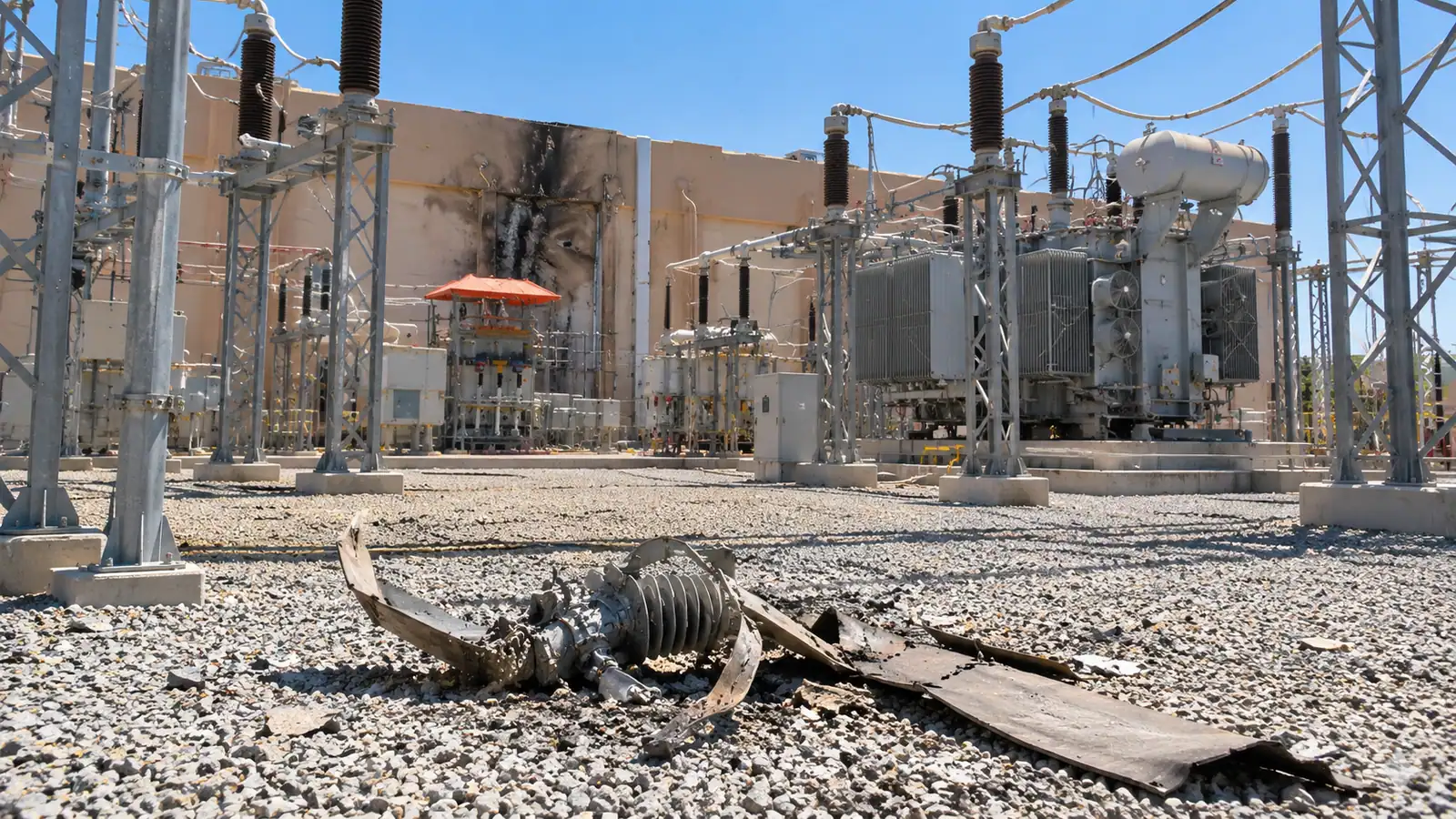
The Saudi-led military coalition fighting in Yemen says the Houthis used a drone to attack a power station in Madinah early on Tuesday, September 29. The coalition says this station supplies electricity to the Prophet's Mosque, Masjid an-Nabawi. One transformer was put out of service, but the city's power supply kept working. The Houthis have rejected the charge and called it a lie.
Coalition spokesman Major General Turki al-Maliki gave the details on Thursday, two days after the attack. He said the drone struck the Taibah electricity distribution station at 5:11am Saudi time, which was 7:11am in Pakistan.
What the coalition says happened
Al-Maliki said Saudi authorities reviewed the attack and examined pieces of the drone found at the site. He said this proved that the Houthis planned and carried out the strike, which he called a "cowardly terrorist act". The coalition also shared pictures on X showing damage at the station and parts of the drone.
According to the coalition, the damage was limited to one transformer and the wider electricity network was not affected. Official accounts did not report any deaths or injuries. Al-Maliki described Taibah as a civilian facility. He said the attack was part of repeated Houthi attempts to target the Two Holy Mosques in Makkah and Madinah and to hurt the feelings of Muslims around the world. He added that the coalition would keep taking steps to protect the holy sites and their visitors.
Houthis call the charge a lie
A Houthi military source, quoted by the Houthi-run Saba news agency, denied the accusation. He said Saudi Arabia made the claim to hide its failure to prove an earlier charge that the Houthis had tried to attack Makkah. A senior Houthi official also denied any role in attacks on holy sites, according to Houthi media.
No independent body has confirmed who sent the drone. So far, all the details about the attack come from the coalition's own investigation.
A drone near Makkah two weeks earlier
The Madinah attack came exactly two weeks after a scare in Makkah. On Tuesday, September 15, at about 6:50pm, Saudi air defences shot down a drone south of Makkah before it could enter the restricted airspace over the holy city. The coalition said this was the second Houthi attempt to target Makkah, after a ballistic missile incident on July 27, 2017.
The Houthis denied that too. They said their attacks are aimed at Saudi oil sites and military bases, not at holy places. But the attacks on Saudi soil have kept growing. On September 14, the coalition said Houthi missiles and drones hit civilian areas in Khamis Mushait, Abha and Taif, injuring 13 civilians. A few days before that, drones struck Saudi Arabia's East-West oil pipeline in the Riyadh and Madinah regions.
How the fighting started again
This is the most serious fighting between Saudi Arabia and the Iran-aligned Houthis since 2022. That year, a truce agreed with the help of the United Nations mostly stopped attacks across the border. The calm broke in July this year. On July 13, an attack hit Sanaa airport, which the Houthis blamed on Saudi Arabia, and the Houthis then fired missiles at Abha airport in southern Saudi Arabia.
On July 20, the Houthis declared a naval blockade on Saudi Arabia and began targeting Saudi-linked ships in the Red Sea. This hits Saudi Arabia hard. Because shipping through the Strait of Hormuz has been disrupted by this year's war involving Iran, the kingdom has been sending much more of its oil through the East-West pipeline to the port of Yanbu on the Red Sea. Houthi forces have also taken large areas along Yemen's Red Sea coast. Saudi Arabia has answered with airstrikes in Yemen and is backing Yemeni government forces trying to push the Houthis back.
What it means for Pakistan
For Pakistanis, this news touches both faith and daily life. A very large number of Pakistanis travel to Saudi Arabia every year for Umrah and visit the Prophet's Mosque in Madinah. Saudi Arabia is also home to the biggest community of overseas Pakistanis. The coalition's statement did not announce any change for visitors, and it said protecting pilgrims remains a priority.
Pakistan is also now bound to Saudi Arabia by a defence pact. On August 7, Prime Minister Shehbaz Sharif, Saudi Crown Prince Mohammed bin Salman and Turkish President Recep Tayyip Erdogan signed the Makkah Joint Defence Agreement. It says an armed attack on any one of the three countries will be treated as an attack on all of them. The pact builds on the defence agreement Pakistan and Saudi Arabia signed in September 2025.
Islamabad has strongly condemned the recent Houthi attacks. The Foreign Office called the pipeline strikes a clear violation of international law, and described the attempt on Makkah as "heinous and deeply concerning". Earlier in September, the Foreign Office also said there had been no talks about a military response under the Makkah pact, and that Pakistan would act when the time comes. Speaking at the UN General Assembly on September 25, Shehbaz Sharif said any threat to the safety of the Haramain Sharifain is "a red line that must never be crossed", while also calling for diplomacy.
There is a money side too. Pakistan buys much of its oil from the Gulf, so any more trouble for Saudi oil moving through the Red Sea can affect fuel supplies and prices at home.
What happens next
Gulf countries, Jordan and Turkiye have already condemned the Madinah attack. The coalition says it will continue its steps to stop further Houthi attacks, and fighting inside Yemen is getting worse, with explosions reported in the Houthi-held capital Sanaa this week.
The three members of the Makkah pact have set up a Strategic Political and Defence Committee, which first met in Istanbul on August 31, to turn the agreement into practical plans. With a second incident linked to the holy cities in two weeks, how this committee and Islamabad respond will be watched closely by people across Pakistan.