
PM Shehbaz, Zardari Discuss Governor's Rule Option in KP
PM Shehbaz Sharif meets President Zardari and key ministers as the Centre weighs governor's rule or emergency in Khyber Pakhtunkhwa.
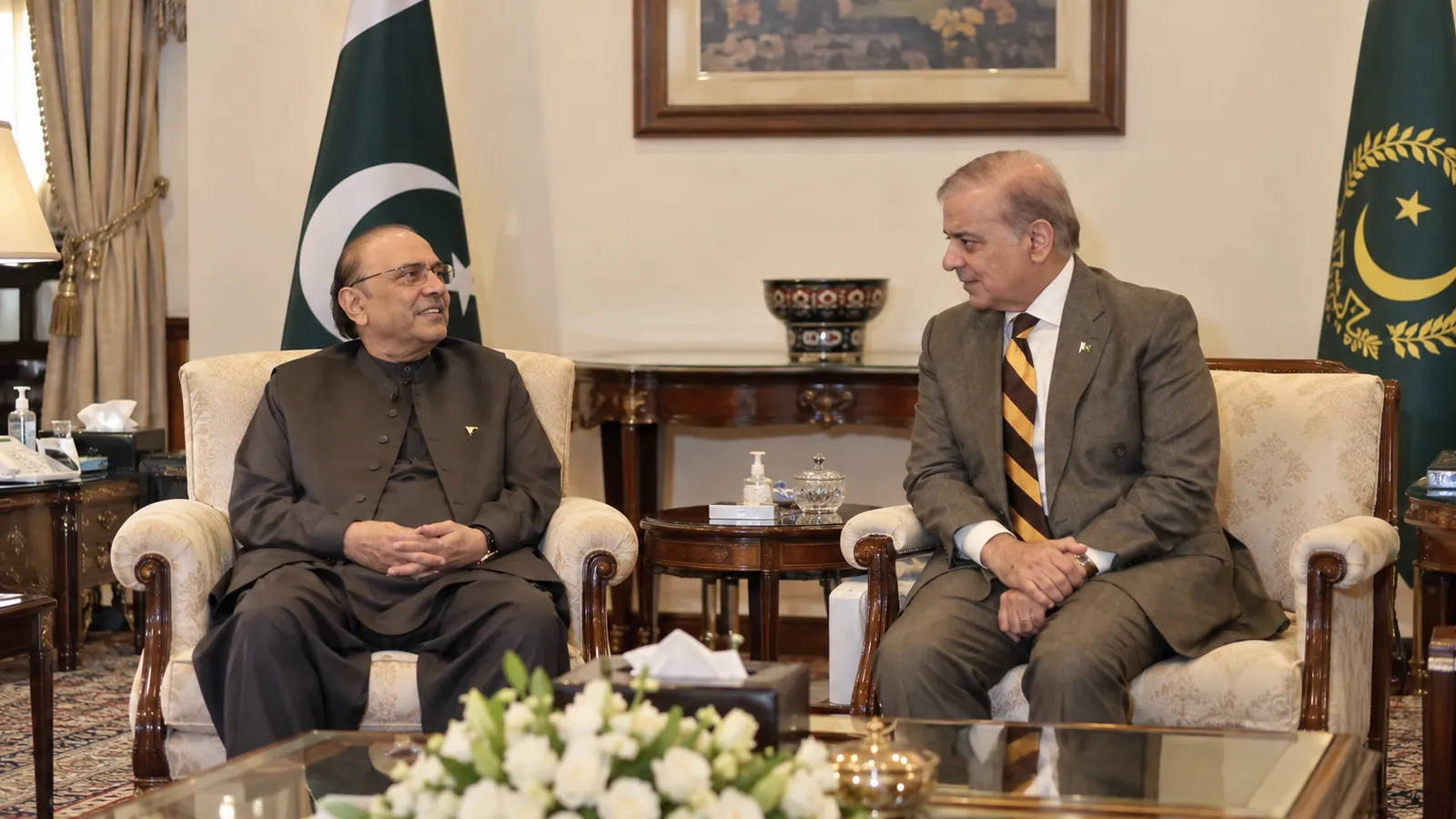
Prime Minister Shehbaz Sharif is meeting President Asif Ali Zardari and senior federal ministers in Islamabad on Thursday to discuss the political and security situation in Khyber Pakhtunkhwa (KP). The federal government is looking at constitutional options for the province, including governor's rule and an emergency. The talks come just three days before Pakistan Tehreek-e-Insaf (PTI) plans to march on Islamabad from KP.
According to sources, the prime minister called Interior Minister Mohsin Naqvi and Kashmir Affairs Minister Amir Muqam to the Prime Minister's House for a detailed discussion on the province. Muqam is also the PML-N president in KP. Later in the day, the prime minister is expected to meet the president at the President's House and brief him. No final decision has been announced yet.
Government Holds Back For Now
Thursday's talks follow a high-level meeting chaired by the prime minister on Wednesday. Federal ministers and senior officials reviewed law and order across the country, with special focus on KP. Sources said views were taken on Articles 233 and 234 of the Constitution, and the meeting agreed to consult President Zardari and other stakeholders before deciding.
According to The News, the government decided not to take any immediate step for now. It chose to give PTI one more chance to call off its October 4 march and change its confrontational approach. In simple words, what PTI does in the next few days may decide what the Centre does next.
Federal ministers accuse the PTI government in KP of following political goals and not giving state institutions enough support against the banned Tehreek-e-Taliban Pakistan (TTP). Parliamentary Affairs Minister Tariq Fazal Chaudhry said on Wednesday that consultations on an emergency under Article 232 were under way. Information Minister Attaullah Tarar, however, has said there is no plan to remove the provincial government.
PTI Says The March Will Go Ahead
PTI first announced the Islamabad march for September 27, then moved it to October 4. KP Chief Minister Sohail Afridi will lead it. KP Information Minister Shafi Jan said the march will start from the southern districts of the province.
PTI Chairman Barrister Gohar Ali Khan said the march will be peaceful and political. He asked the government not to impose governor's rule or an emergency and said the right response was talks with PTI founder Imran Khan. He also warned that any move against KP's provincial autonomy could affect other provinces too. On Monday, Afridi said threats of governor's rule or emergency would not move him from his ideology.
Not everyone in PTI agrees on the timing. The party's KP information secretary, Shaukat Yousafzai, wrote to Barrister Gohar on Tuesday asking for another delay because of the security situation. PTI MNA Shandana Gulzar has alleged that party workers and lawmakers in KP are being picked up before the march. These claims have not been independently confirmed.
On the other side, Governor Faisal Karim Kundi warned PTI not to "force the Centre" into governor's rule. Amir Muqam said the conditions for it had been met and that Kundi would lead the province if it was imposed. Reports also say the PPP, President Zardari's party, has backed the idea.
The Options, Explained Simply
Governor's rule (Article 234): The president can take over the powers of a provincial government if he is satisfied that the province cannot be run according to the Constitution. In practice, the governor then runs the province for the Centre. Parliament must approve this, and it cannot stay in force for more than six months in total.
Emergency (Article 232): The president can declare an emergency if Pakistan's security is threatened by war or by internal disturbance beyond the province's control. For internal disturbance, the provincial assembly must pass a resolution. If the president acts without one, both houses of Parliament must approve it within 10 days. During an emergency, Article 233 allows some fundamental rights to be suspended.
Change inside the assembly: Reports have also mentioned a no-confidence motion against the chief minister under Article 136. It needs the signatures of 20 percent of the assembly's members, which is 29 of KP's 145 seats. A session must then be called within three to seven days, and members vote by going into two separate lobbies. If the motion passes, the Speaker announces a schedule to elect a new chief minister. Under Article 130(7), the governor can also ask the chief minister to take a vote of confidence if he believes the chief minister has lost his majority.
PTI-backed members hold a clear majority in the KP Assembly, so any change from inside would need many of them to switch sides. Talk of the chief minister's disqualification or the assembly's dissolution has also appeared in reports, but none of this is confirmed.
Deadly Weeks In KP
The political fight is happening during one of the worst recent spells of violence in the province. At least 21 people, including 15 police officers, were killed in the attack on Kohat Police Lines on September 18. A few days later, a roadside bomb hit a security convoy in KP and killed six soldiers.
On September 25, the Counter Terrorism Department stopped three suicide bombers in Peshawar, but a police constable was martyred. The next day, a blast at a joint checkpoint in Dera Ismail Khan killed 12 people and injured 35. The TTP claimed responsibility.
Has This Happened Before?
Yes. In February 2009, during Zardari's first term as president, governor's rule was imposed in Punjab after the Supreme Court disqualified Shehbaz Sharif as chief minister. It ended in March 2009 when the court restored him. In January 2013, governor's rule was imposed in Balochistan after bomb attacks in Quetta killed more than 90 people from the Hazara community. It lasted about two months.
What Happens Next
The outcome of the meeting between the prime minister and the president will be the next big signal. After that, all eyes are on whether PTI goes ahead with its march on October 4. If it does, the Centre may return to the governor's rule or emergency options. If PTI steps back, tensions may cool for a while.
For ordinary people, the march could mean road closures. During PTI's earlier marches, including in November 2024, roads between KP and Islamabad were blocked with containers and mobile internet was disrupted in parts of the capital. People travelling between KP, Rawalpindi and Islamabad around October 4 should check official traffic updates before leaving home.